SEO: On-Page Optimization

Each page on your site needs a clear job. If Google can’t tell what that job is, it won’t rank the page for it.

Pages With a Clear Purpose

Your pages exist and the content is decent, yet they sit on page two or don’t rank at all. Vague titles, muddled headings and missing internal links can make it hard for search engines and readers to see what a page offers.

We work through title tags, meta descriptions, heading structure, content quality, internal links and schema markup, the code that labels your content for search engines. Each page gets its best chance to rank for its target keywords.
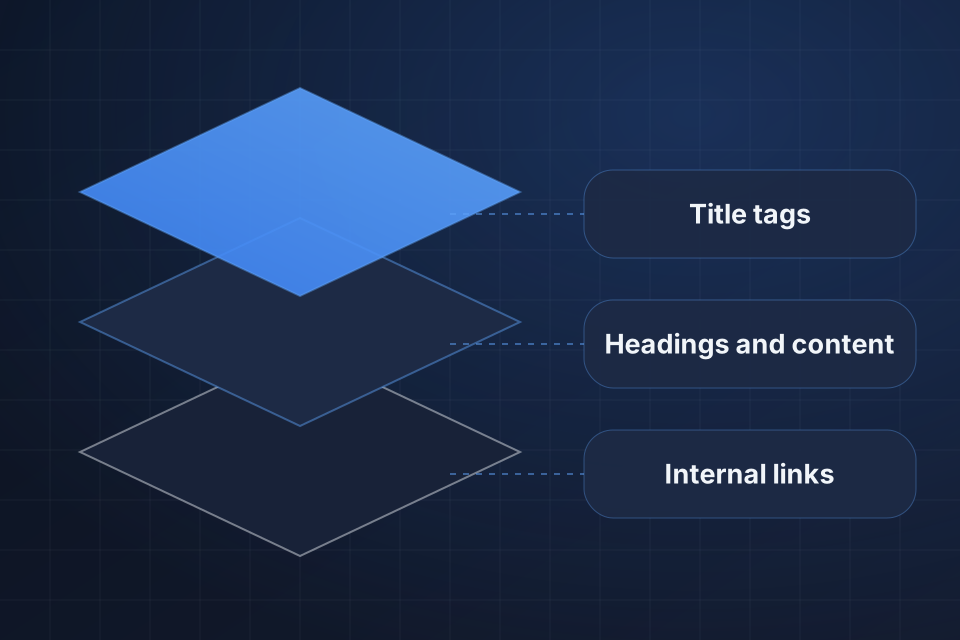
Diagram of on-page SEO in three layers: title tags, headings and content, and the internal links connecting pages.

Changes on Every Page

Title tags and meta descriptions rewritten for search and clicks

A clear heading hierarchy and content structure

Schema markup that can earn rich search results

Internal links that spread authority across your site

How We Tune Each Page

1

Set Targets

We weigh search volume, difficulty, business relevance and intent to pick each page’s target keywords.

2

Rewrite Tags

Title tags, meta descriptions and headings get rewritten to match what each page targets.

3

Improve Content

We lift content quality, optimize images and clean up URL structure where needed.

4

Connect Pages

Internal links and schema markup go in, so search engines can see how your pages relate.

Why Choose System Strats

We’ve grown organic traffic for companies across various industries. On-page work is where you control the result most directly, because every change happens on your own site.

Frequently Asked Questions

It’s everything you control on your own website to improve rankings. That includes page titles, content quality, heading structure, image optimization, internal links, schema markup and URL structure.

We analyze search volume, keyword difficulty, business relevance and user intent. That shows which keywords offer the best mix of traffic potential and likely conversions.

It’s structured data that helps search engines understand your content. It can trigger rich results such as star ratings, product pricing and event details, which can win you more clicks.

Changes are usually crawled and indexed within days to weeks. Ranking improvements usually show within 1 to 3 months and can continue over 6 to 12 months as search engines process the signals.

Ready to Get Started?

Tell us about your project and we'll get back to you within 24 hours.