SEO: Site Speed & Core Web Vitals

Visitors leave slow pages before they see what you sell. Google pays attention to that too.

When Pages Load Too Slowly

Your pages take too long to appear, buttons lag, or the layout jumps as it loads. Those problems cost you rankings and sales.

We optimize your Core Web Vitals, Google’s three measures of loading speed, responsiveness and visual stability. The aim is to pass Google’s page experience thresholds and give visitors the fast site they expect. We work on images, code, caching and your CDN, the network of servers that delivers pages closer to each visitor.
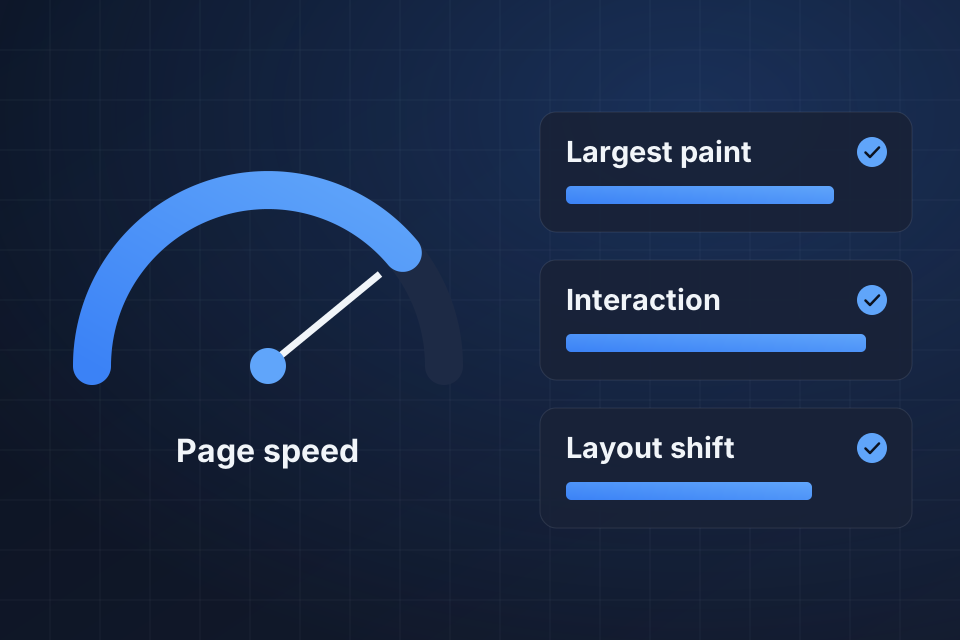
Diagram of a page speed gauge tied to Google's Core Web Vitals: largest paint, interaction and layout shift.

Where the Speed Comes From

Core Web Vitals fixes aimed at Google’s ranking signals

Images and media optimized to load faster

Cleaner code, with key resources loading first

CDN setup and a caching plan

How We Speed Up Pages

1

Measure Vitals

We measure loading speed, interactivity and visual stability to see which pages miss Google’s thresholds.

2

Trace Causes

Heavy images, render-blocking JavaScript, extra third-party scripts and slow server responses all get checked.

3

Apply Fixes

We optimize media, clean up code, set resource priorities, and configure caching and your CDN.

4

Confirm Results

Each page gets retested against Google’s thresholds to confirm the changes worked.

Why Choose System Strats

We’ve grown organic traffic for companies across various industries. Speed work often produces the fastest SEO wins, which makes it a sensible place to start.

Frequently Asked Questions

They’re Google’s three key user experience metrics: LCP for loading speed, INP for interactivity and CLS for visual stability. Google sets a target for each, and they’re a confirmed ranking factor.

It matters in two ways. It’s a direct ranking factor through Core Web Vitals and an indirect one, because slow sites have higher bounce rates and lower engagement. Improving speed often produces the fastest SEO wins.

Common causes are unoptimized images, too many HTTP requests, render-blocking JavaScript, no caching, unminified CSS and JavaScript, slow server response and too many third-party scripts.

Yes. Each platform has its own optimization techniques. We’re experienced with all major ecommerce and CMS platforms and know the approaches that get the best results on each.

Ready to Get Started?

Tell us about your project and we'll get back to you within 24 hours.