SEO: Site Migrations (Preserving Rankings)

A new site can launch beautifully and still lose the rankings the old one took years to earn.

Moving Without Losing Rankings

You’re changing platforms, moving to a new domain or redesigning the site. Those are the most dangerous moments for SEO, because pages can move or vanish and search engines lose track of them.

We manage the SEO side of the move. We record where you stand now, map every redirect, confirm that content carries over, and monitor the site after launch. That protects the rankings you worked hard for.
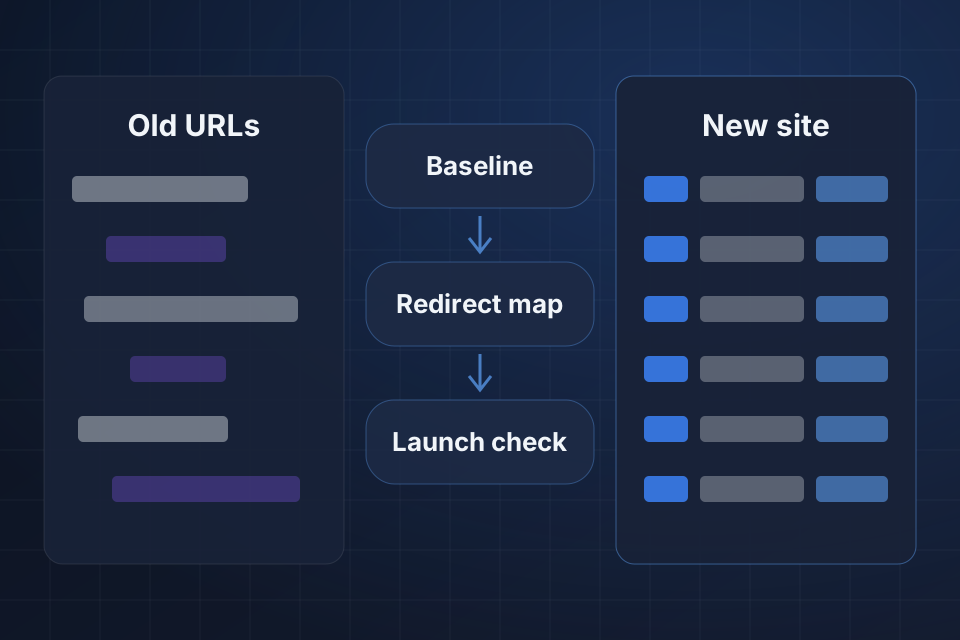
Diagram of old URLs carried to a new site through a ranking baseline, a redirect map and a launch check.

Protection Through the Move

A complete 301 redirect map for your old URLs

A documented SEO baseline from before the move

Checks that content matches between the old and new sites

Close monitoring after launch, with issues resolved quickly

How We Protect Rankings

1

Record Baseline

We document your current SEO position, so there’s a clear record before anything moves.

2

Map Redirects

Every old URL gets a 301 redirect, a permanent forwarding rule, to its most relevant new URL.

3

Verify Launch

We confirm each redirect works and check that content on the new site matches the old one.

4

Monitor Daily

While Google recrawls your pages, we watch the site every day and fix problems as they appear.

Why Choose System Strats

We’ve grown organic traffic for companies across various industries. A migration can put that kind of progress at risk, so we plan the SEO before the move starts.

Frequently Asked Questions

With proper planning, any loss should be small and temporary. Without SEO planning, losses can be large and can take months to recover.

301 redirects. Every old URL must redirect to the most relevant new URL. Missing or incorrect redirects are the top cause of ranking loss during migrations, so we map every URL and verify every redirect.

It depends. URL changes add risk, so we only recommend them when the SEO benefit is clear. Good reasons include fixing poor URL structures, consolidating duplicate content, or adding a logical hierarchy that was missing.

With proper redirect handling, 2 to 8 weeks for most sites. Google needs to find the redirects, recrawl the new pages and reassess rankings. We monitor daily during this period and address issues right away.

Ready to Get Started?

Tell us about your project and we'll get back to you within 24 hours.