If every report starts with an hour of cleanup, your systems aren’t speaking the same format.
Data from your business systems is messy, inconsistent and stuck in separate places. We build data transformation pipelines, automated routines that clean, standardize and reshape that data. It then arrives in a form your team can actually use for reporting, analysis and the decisions you make each day.
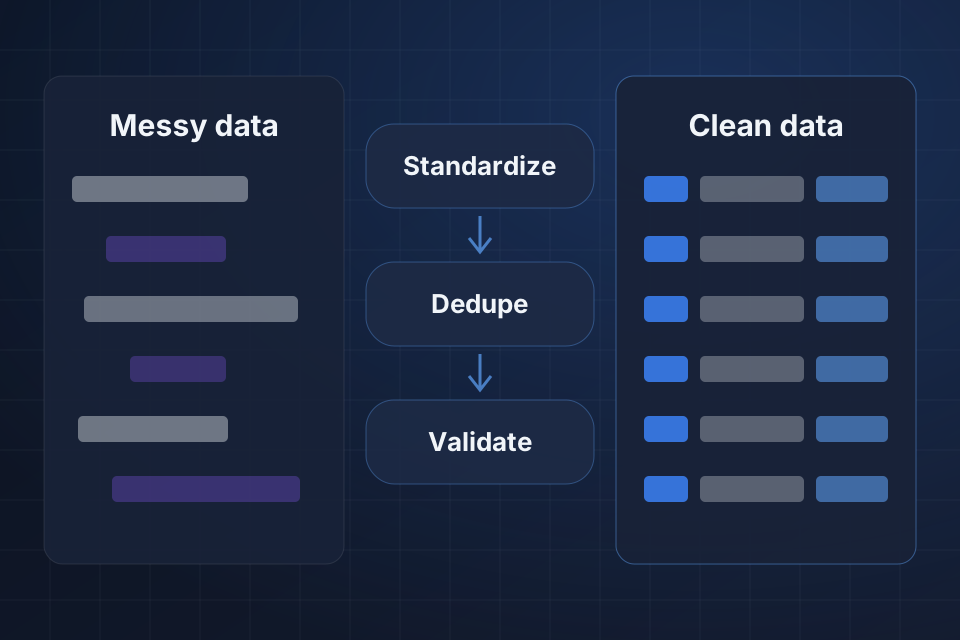
Your ERP writes dates one way and your online store another. Your CRM keeps names in one field while accounting splits them in two. Nobody minds until you combine systems for reporting. Then every report needs manual cleanup, every dashboard comes with caveats and analysis starts with hours of data wrangling.
The same customer, product or transaction looks different in every system. Combining them takes manual cleanup every time, and the results are never quite trustworthy.
Your team spends hours each week downloading CSV files, cleaning them in Excel and uploading them elsewhere. It’s tedious, error-prone and gets worse as your data grows.
Dashboards show different numbers depending on who built them and which source they used. With no single source of truth, leadership won’t act on the data.
Duplicates, missing fields, invalid formats and stale entries enter your systems daily. Nobody notices until they cause a problem in a report, integration or customer interaction.
We build pipelines that run on their own, consistently and reliably. First we learn your sources, your target formats and the business rules for cleaning data. Then each pipeline pulls data from your systems, cleans it, checks it and loads it into your warehouse, reporting tools or other systems. Built-in monitoring tells you when something breaks, long before it reaches a quarterly report.
Automated pipelines pull data from your source systems, apply your business rules and load it into your data warehouse or target platform. They run on schedule and are monitored.
We standardize formats, remove duplicates, fill missing values, check data types and apply the same rules across all your sources.
We map fields between systems with different structures and naming, then bring them into one consistent format for analysis.
For fast-changing data like stock levels, order status and pricing, streaming pipelines deliver updates as they happen instead of waiting for a batch.
Validation rules, anomaly detection and quality scorecards watch your data continuously. When bad data arrives, your team gets an alert and the records are held back before they spread.
For cloud data warehouses, we build modular dbt layers that keep your business logic under version control, tested and easy to follow.
We study your source data’s structure, quality, volume and quirks, then document the rules and the target format your systems need.
We build pipelines with the right tools for your stack: dbt for warehouse work, Python for complex logic, or native platform features.
We add automated tests at every stage, so data gets checked before, during and after each run and issues surface right away.
We set up monitoring, alerts and quality baselines, then adjust the logic as your business rules and data sources change.
Data transformation is an ongoing need rather than a one-time project. We work with Python, SQL, dbt and platform-native tools, choosing what suits your data volume, complexity and team. Whether you need nightly batch jobs or real-time streaming, we build documented, maintainable pipelines your team can extend.
Tell us about your project and we'll get back to you within 24 hours.