Similar filters multiply URLs
Reordered filter settings and minor options create several URLs with nearly identical product lists. The catalog grows competing versions without adding useful new content for visitors or searchers.
SEO & GEO
Every filter combination makes another URL, but many show nearly the same products. Preferred pages become unclear and search signals conflict. We map useful filters, apply an agreed URL plan and test that customers can still browse the right products.
Discuss this problemWe group your filter URLs by pattern and compare what each one actually shows before choosing how to treat it. Some filter pages deserve to be landing pages, while others exist mainly to help people browse. We review internal links, canonical tags (which tell search engines your preferred URL) and sitemap files together, so the site sends one clear message. Search engines still choose how to process those signals. The fix keeps filtering on your site working, and we check it against sample product lists. We then monitor the URL groups we reviewed to see how search engines cover them later.
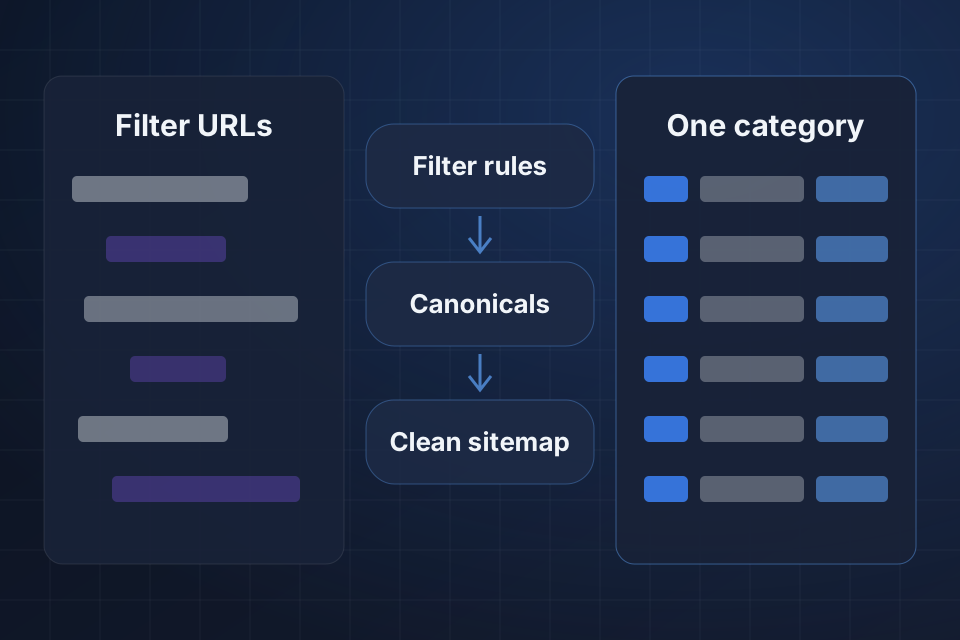
Reordered filter settings and minor options create several URLs with nearly identical product lists. The catalog grows competing versions without adding useful new content for visitors or searchers.
Filtered pages name different preferred pages while internal links promote every version. These generated signals do not show which page the business wants to put forward.
Generated combinations swamp your catalog's useful page structure. Shoppers still need filters, but the bigger URL structure makes it harder to tell important categories and deliberate landing pages from the rest.
We list your filter patterns and compare duplicates with truly useful filtered views. Actual content and customer purpose decide which pages need their own role and which are merely other ways of browsing.
We inspect internal links, canonical tags and sitemap entries for sample combinations. Conflicting signals get identified together before we choose a revised treatment for each URL pattern.
With the site owner, we agree which landing pages are valuable. Filtered views that deserve deliberate content are separated from automatic combinations that offer little beyond their product list.
We apply the reviewed crawl and canonical plan to the URL patterns your platform supports. Treatment follows each page's purpose, not a blanket assumption that every filter should be indexed or blocked.
Generated links and sitemap files get aligned with the intended landing pages. The fix goes into the generator you maintain, so later catalog changes do not bring back inconsistent signals.
We keep filtering working and test sample results after the URL change. Customers can still narrow the product list, while unintended competing versions follow the approved rules for search and preferred pages.
Not automatically. It depends on whether a filtered page serves a useful landing purpose of its own. We map the patterns and content before choosing crawl or canonical controls. A blanket block can remove valuable pages, while unlimited generation can create large numbers of near-duplicates.
No. Canonical signals express a preference, but search engines decide how to process it. We align related signals and inspect later coverage. Correct tags on your pages do not establish that every competing URL will immediately disappear or that the intended page will always be selected.
Yes, and that is part of what the work has to pass. We test product lists and usable controls after the revised URL treatment. The work should keep useful browsing available, while making deliberate landing pages and near-duplicates clearer in the site's generated signals.
Tell us your catalog platform and share one public category URL with competing filter versions. Include the page you want customers to find, so we can compare its purpose and search signals.
Tell us about your project and we'll get back to you within 24 hours.