Column names change without warning
A familiar file arrives with renamed columns, and the importer skips or misplaces their values. The file opens normally, so staff may not notice the change in layout before it publishes.
Data transformation & PIM
A supplier renames a column or a spreadsheet drops zeros from product codes, and the import misses or updates the wrong items. We trace how files and codes are read, then add deliberate mappings and checks before your catalog publishes.
Discuss this problemWe compare the changed supplier file with the last accepted layout, using a small sample with sensitive details removed. We follow column meaning, separators and product-code formatting through every step of the import. An unknown layout should become an exception someone can review, not an excuse to guess at the next import. Approved variations get explicit mappings. Your catalog owners review unclear product codes, and the corrected process tests rejected rows separately from records allowed to update existing products.
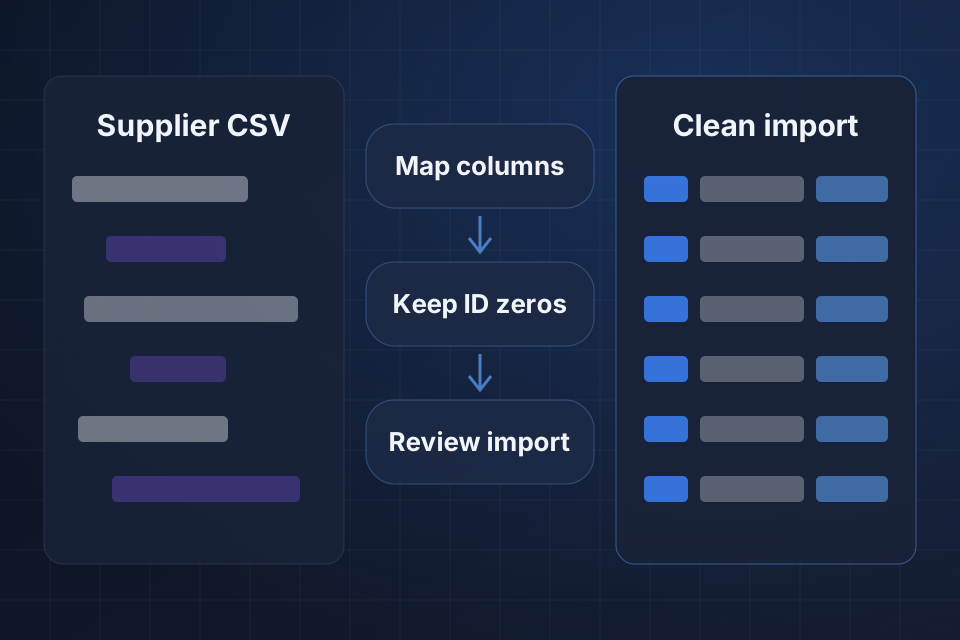
A familiar file arrives with renamed columns, and the importer skips or misplaces their values. The file opens normally, so staff may not notice the change in layout before it publishes.
Product codes lose their leading zeros when treated as numbers. A similar-looking code now fails to match your catalog or points to another item, even though the spreadsheet looks fine to the person using it.
A file with a changed layout updates products before row checks spot the problem. Catalog staff find the wrong fields later, during purchasing, receiving or the next customer-facing publishing cycle.
We compare headers, delimiters and sample rows with the accepted supplier layout. This separates a deliberate format change from bad input, or from a column whose meaning has changed.
We trace product-code handling through parsing and catalog matching. Conversion to numbers, trimming and case changes can alter a code before the actual catalog lookup happens.
We inspect the point where checks end and updates begin. The review shows which missing fields or implausible values get caught before publishing, and which now reach existing catalog records unchecked.
We set up explicit mappings for approved supplier variations and reject unfamiliar layouts for review. A renamed header is accepted only when its meaning is confirmed, not inferred from its position.
We keep product codes as text through the supported import steps. Unclear damaged codes stay separate until reliable source evidence or an approved catalog rule confirms their intended match.
We separate row checks from catalog updates and report where rejected data sits in the source file. Staff can fix a supplier exception without letting incomplete or mismapped values replace your maintained product information.
No. Approved variations can be mapped deliberately, but an unfamiliar layout needs review. Guessing what a field means risks changing the wrong catalog data. We provide a clear exception showing what changed before the file is allowed to publish product updates.
Only with reliable source evidence or a documented ID rule. Missing zeros can't safely be invented for every item. Unclear rows stay separate for supplier or catalog review, while the import is corrected to keep future codes as text.
Maybe not. A stable supplied format may be handled entirely in the import process. If required IDs or fields are missing, the supplier becomes a dependency. We document what they must provide and agree a practical delivery arrangement, rather than hiding the gap in a parser.
Name your import and catalog tools, then share a supplier-file excerpt, with sensitive details removed, showing the changed header or product code. Keep the original column layout and one safe example of the matching error.
Explore Product Information Management More problems in Data transformation & PIM
Tell us about your project and we'll get back to you within 24 hours.