Product Information Management: Product Data Governance

A clean catalog on launch day proves little. The real test is how it looks a year later.

Why Product Data Decays

Your product data was clean once. Then new people added records, each team followed its own habits, and errors spread from one channel to the next.

We set up the ownership, standards, workflows and quality monitoring that stop that slide. Everyone knows who owns what and what good looks like, so your product information stays accurate, complete and consistent long after the first rollout.
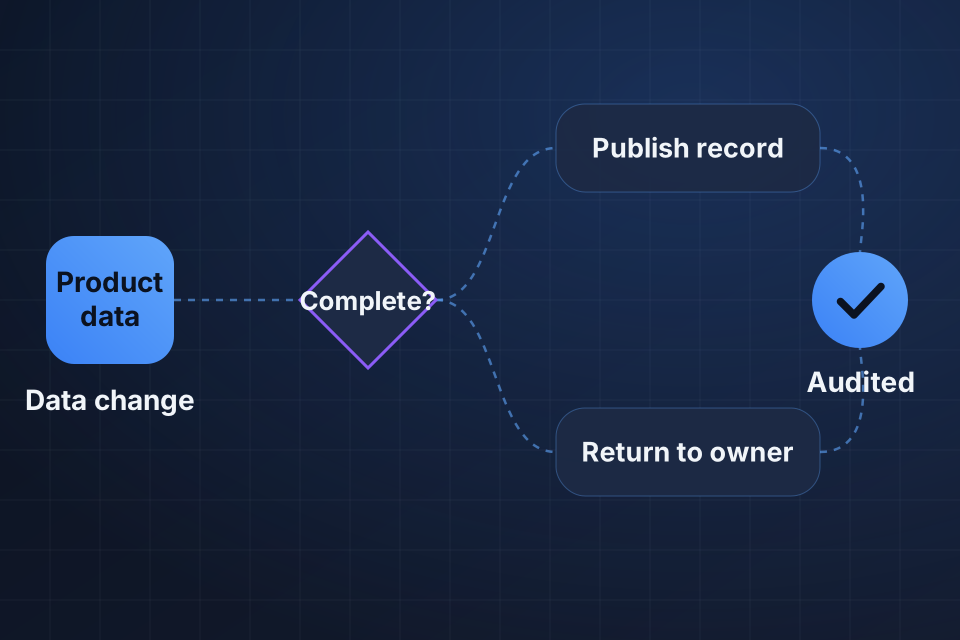
Diagram of product data governance where each change passes a completeness check, then publishes or returns to its owner.

What Stays in Place

A named owner for each type of product data

Quality standards backed by validation rules

Enrichment and approval workflows that route work to the right person

Regular reports that show where data quality is slipping

Building Your Governance

1

Assign Ownership

We agree who owns each part of your product data, usually across product, marketing and operations.

2

Set Standards

We write completeness rules, validation constraints and quality measures for each channel.

3

Build Workflows

We set up enrichment and approval routes, so changes get reviewed and incomplete products reach the right person.

4

Monitor Quality

We set up regular reports and alerts that flag products falling below your standards.

Why Choose System Strats

We’ve implemented PIM systems for companies with complex product catalogs. We understand the operational impact of poor product data, so the rules we set are built for your team to use every day.

Frequently Asked Questions

It’s the set of rules for your product data: who owns it, what quality it must meet, how changes get approved, and how quality gets checked over time. It prevents the slow decline that makes product data unreliable.

We set completeness rules, validation constraints and quality KPIs (the measures you track) for each channel. Regular reports then show trends and flag products that fall below standard.

It depends on your team, but typically product managers own core data, marketing owns descriptions and creative, and operations owns logistics attributes. Clear ownership prevents gaps.

Many can. We set validation rules that stop bad data from being saved, triggers that route incomplete products for enrichment, and alerts when quality drops below your thresholds.

Ready to Get Started?

Tell us about your project and we'll get back to you within 24 hours.