A case is treated as one unit
An order for one case arrives in the next system as one unit, because both systems accept the same number. The order looks fine on screen, but it does not match what your warehouse staff actually handle.
Data transformation & PIM
One system means a case, another means a single unit, and the same number throws off stock or price. Staff patch counts with no clear rule. We define the units and match supported conversions to the goods your team handles.
Discuss this problemWe review the units you buy, sell and stock for a sample of products. Pack sizes may differ from one product to the next, so we need evidence before using one multiplier for everything. We then follow each conversion through the connections between your systems, looking for steps that are missing or repeated. Prices get checked on the same unit basis as quantities. Your stock and finance owners approve the rules, and we test them with sample sales and receipts. Fixing past stock errors needs its own evidence of each movement, plus a physical review.
An order for one case arrives in the next system as one unit, because both systems accept the same number. The order looks fine on screen, but it does not match what your warehouse staff actually handle.
One system reads a case price as a unit price. Your buying and margin comparisons then mislead you, because the price and the quantity no longer describe the same thing.
Receiving or selling a pack changes your stock by the wrong count. Staff correct the balance by hand, but no one finds where the conversion was skipped or applied more than once.
We establish what each quantity means in your purchase, sales and stock records. A sample of products, including unusual packs, shows where one general unit label hides different physical amounts.
We follow each conversion through the connected systems to see where it takes place. Two connections can apply the same multiplication, while another path may pass the original count along unchanged.
Next we compare the unit behind each price with the matching quantity. This shows whether a corrected stock conversion would still leave buying or selling prices based on a different measure.
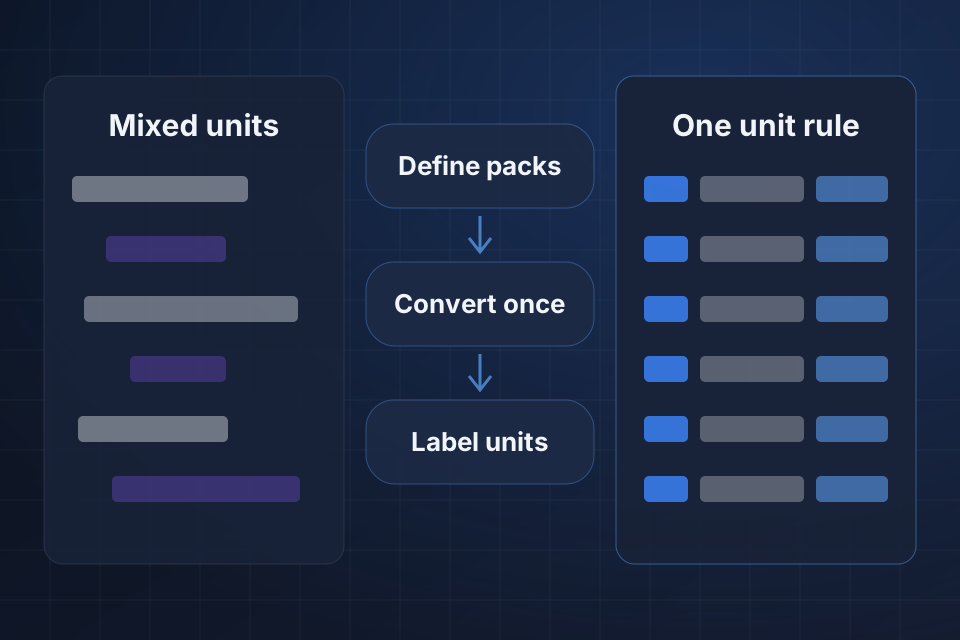
We set up the unit rules you approve for each product, with any exceptions spelled out. Pack contents and variable measures stay where they belong, not hidden inside one unexplained multiplier for the whole catalog.
Each conversion moves to one agreed point in the flow, and we correct any mappings that compete with it. The new path keeps the original meaning. It does not skip the conversion or repeat it in a later system.
We make the unit and quantity basis clear in the fields or reports you review. Your staff can read a transaction before approving it. Changes to past stock still depend on stock evidence and your owners' decisions.
Only where the products share the same physical relationship. Pack contents and variable measures can differ from product to product. We test sample exceptions and keep the rules at the product level you need, so those differences stay easy to explain.
It can be, because this problem can affect prices as well as stock. We establish whether each amount describes a single unit, a case or some other measure, then compare it with the quantity conversion. Fixing stock alone should not leave staff buying or selling from a conflicting price basis.
Only with transaction evidence and a physical stock review. We find the affected movements and the conversion error, then your stock owner approves any adjustments. Balances may include unrelated manual corrections, so today's difference is not automatically the quantity to put back.
Tell us which platforms you use for buying, selling and stock. Share one product example with private details removed, showing its pack contents, transaction quantity and the unexpected stock movement or price, so we can compare what the units mean.
Explore Product Information Management More problems in Data transformation & PIM
Tell us about your project and we'll get back to you within 24 hours.