Gateway names dominate source reports
A gateway shows up as a major sales source even though customers arrived through other channels. The gap clusters around purchases that leave your store to complete payment.
Google Analytics
A customer arrives from your marketing, pays through an outside service, and the gateway gets credit for the sale. Your reports now describe the payment step. We inspect the return and fix confirmed problems without assuming every route behaves alike.
Discuss this problemWe compare the affected payment methods using a controlled journey from a known source. The review covers the trip out to the provider, the return page, and the purchase event after payment. Exact provider domains matter when referral rules are applied. We also check whether missing tracking or session details explain a separate gap. After the fix, your team gets a record of the tested routes and the point where the change took effect, which you need to read earlier gateway referrals.
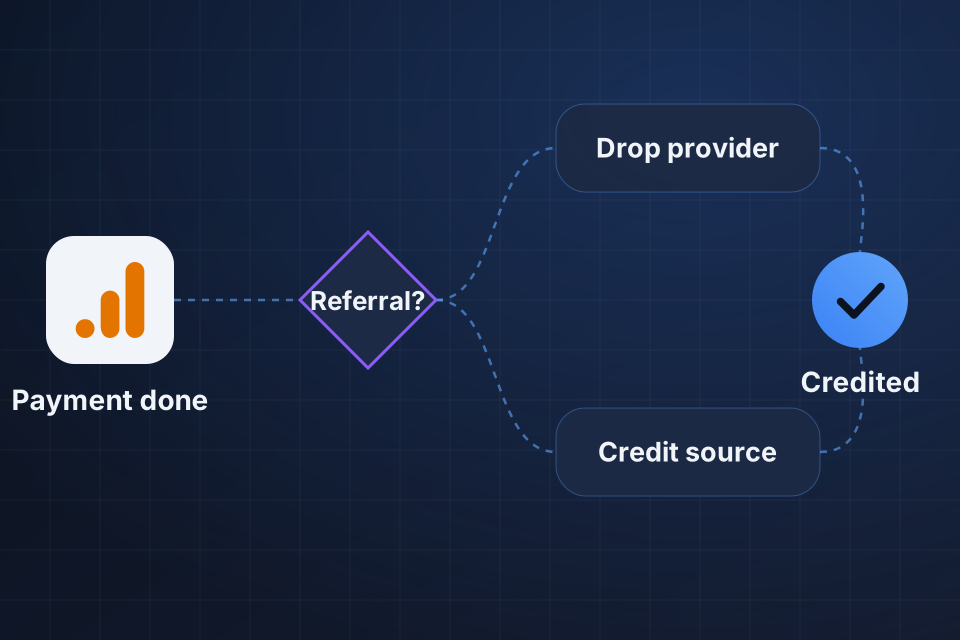
A gateway shows up as a major sales source even though customers arrived through other channels. The gap clusters around purchases that leave your store to complete payment.
A controlled purchase starts from a known campaign and picks up an unexpected source on return. Your system records the sale, but your staff can't use its final source to see where the customer came from.
One payment method keeps the expected source while another adds a referral. Reviewing all purchases together hides this checkout-specific behavior and makes the problem harder to reproduce.
We compare the visit before payment with the return page and the events after it. This finds the point where the provider enters your reports, so we don't assume the original campaign was missing.
Testing shows the exact provider domains, and we inspect those along with any existing unwanted-referral settings. We also review how far each rule reaches, so unrelated legitimate referrals don't get hidden by accident.
We check purchase timing and session details after each affected return. A missing confirmation event may need its own fix, separate from the setting that handles provider referrals.
We apply supported referral settings to the confirmed provider domains. The handover records why each domain was included and which checkout routes supplied the evidence for that decision.
We revise return-page tracking you own that interrupts the measured purchase journey. We judge provider-controlled behavior against the integration available for that method, and we state the limits openly.
We document the change date and compare tested methods after analytics processing. Past provider referrals remain a separate question of interpretation, because the fix does not recreate details that were missing back then.
It can fix a confirmed unwanted referral, but the purchase journey still needs testing. Missing tags or interrupted session details may cause a separate gap. We inspect the return route first and confirm that the chosen setting resolves the observed problem for each affected payment method.
Not necessarily. Consent and browser behavior can limit attribution, which is how a report assigns credit for a sale, even with a correct return route. We check the behavior you can control and explain the remaining gaps. Analytics and store totals may still differ, so your order records remain the reference for completed sales.
No. We use checkout paths, analytics settings, and order references with personal details removed. If testing requires a transaction, we agree with your team on a provider-supported test route or a controlled purchase before we examine the events it produces.
Name your store platform, analytics tool, and the affected payment provider. Share an order reference, with personal details removed, that shows the unexpected source and the approximate payment time. We can then trace the return route.
Tell us about your project and we'll get back to you within 24 hours.