Totals are the only evidence
Record counts match, but key links or converted fields stay unchecked. The new system looks complete, while staff can't show that its data supports the tasks they need to do.
Data migration
Records moved, but nobody can show whether the links and values for daily work arrived correctly. Staff keep checking the old system. We check the transfer against agreed criteria and give process owners clear evidence before they rely on it.
Discuss this problemWe agree which record types, relationships and business tasks matter before comparing the transfer. Summary counts show coverage, while checks on sample records test values and links. We document expected exclusions separately from defects. We fix confirmed mapping errors within an approved scope, then compare the affected records again. The result supports your acceptance decision. It also explains any reason you must keep access to the old system, including archive or retention needs the new system can't model.
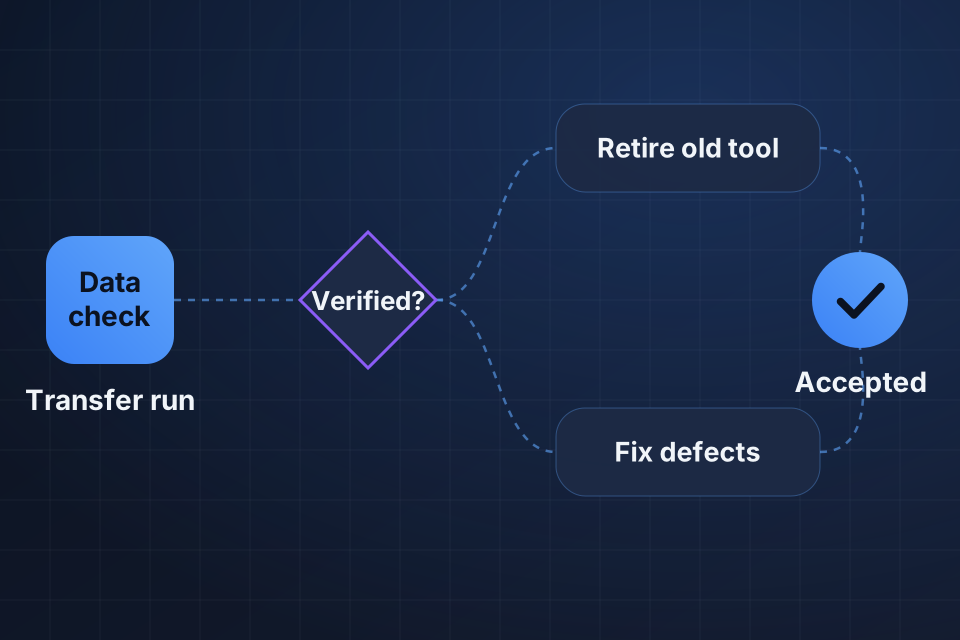
Record counts match, but key links or converted fields stay unchecked. The new system looks complete, while staff can't show that its data supports the tasks they need to do.
Routine customer work still means looking up old records. The old platform stays necessary, because nobody has shown that the moved history or relationships are usable in the new system.
Missing links and wrong values surface one customer at a time during daily use. Defects turn up piecemeal, instead of being compared in one defined report with clear owners.
We set the key checks with your process owners. Required record types and real tasks define what acceptance needs to show, beyond a successful import or a matching overall count.
We compare stable references, converted fields and relationship links on sample records. Samples include important exceptions, so a normal customer record doesn't hide gaps in more complex history.
We review open differences with owners and list expected exclusions separately. Their business impact decides whether a fix, a kept archive or an explicit acceptance exception is needed before routine use.
We build a repeatable comparison showing counts, sampled values and critical relationships. Each result keeps safe references to both systems, so your team can see what each result rests on.
We fix confirmed mapping or relationship defects and rerun only the approved affected records. The new comparison checks the repaired records without duplicating items that moved correctly earlier.
We record passed criteria and open exceptions for the acceptance decision. We also state any need to keep the old system, including any necessary archive, so it isn't left open only because nobody trusts the transfer.
No, counts show coverage but can't prove that links and values are correct. We also check sample records and the business tasks they support. A customer total can match even when orders attach to the wrong customer or required notes are missing.
That depends on accepted exceptions, retention requirements and operating dependencies. Your owners use this evidence to decide when access can change. An archive or another approved way to retrieve records may still be needed for information the new system can't represent.
We identify missing source coverage before calling the new system verified. More export access or a kept archive may be necessary. We document the limit, so acceptance doesn't imply that unavailable history moved just because the accessible records arrived.
Tell us the old and new platforms. Share one redacted migrated record that staff still check in the old system, including the missing relationship or value they can't trust.
Tell us about your project and we'll get back to you within 24 hours.