NetSuite: Integrations

Orders, customers and payments should enter NetSuite once, correctly, with nobody retyping them.

One Entry, Every System

Your store, CRM and shipping system each hold their own version of the same order, and someone keeps them in line by hand. That means double entry, mismatched records and hours lost each week.

We connect NetSuite to your ecommerce platforms, CRMs, shipping providers, payment gateways, EDI partners and custom apps. We use NetSuite’s SuiteTalk web services, RESTlets (custom API endpoints) and middleware, the software that sits between systems. Data syncs accurately, and errors get handled cleanly.
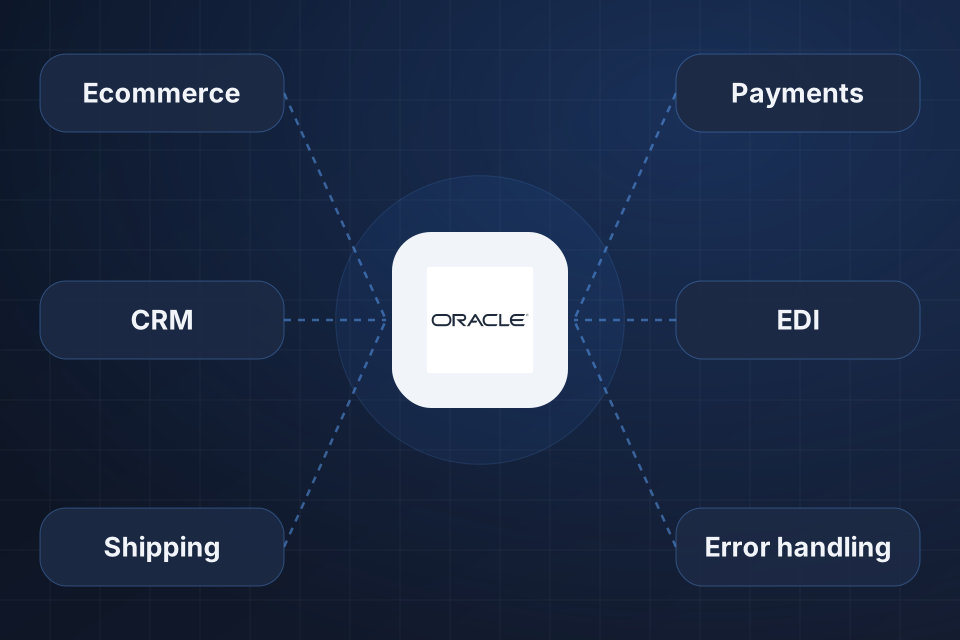
Diagram of NetSuite at the center, connected to ecommerce, CRM, shipping, payments and EDI, with error handling.

What Connected Systems Give You

No more double data entry across systems

Real-time or scheduled syncing, whichever suits each process

Error handling and retry logic that keep data moving

Support for REST, SOAP, SFTP and webhook-based integrations

How We Connect NetSuite

1

Map the Data

We trace what moves between NetSuite and each system, including the fields, the timing and the format.

2

Choose the Route

We pick a direct API link for simple connections and middleware such as Celigo for multi-system work.

3

Build Error Handling

We add retry logic, error logs in custom records, alerts and admin dashboards so problems show up early.

4

Load and Verify

We run data through in the correct order and validate each record so the links between them stay intact.

Why Choose System Strats

We have hands-on NetSuite experience across a range of industries, and we know where most companies stumble. On integrations, that helps us plan for errors and mismatches before your data starts moving.

Frequently Asked Questions

We’ve integrated NetSuite with Shopify, BigCommerce, Salesforce, HubSpot, Amazon, Walmart, ShipStation, Avalara, Stripe and many other platforms. If a system has an API, we can connect it.

We build in retry logic, error logging to custom records, alerts and admin dashboards. Your team can always see the status of data moving between systems.

Yes. Data migration is a core part of our integration practice. We map fields, change data formats where needed, validate records and import everything in the correct order, which keeps the links between records intact.

Both, depending on your situation. Direct API links work well for simple connections between two systems. For complex multi-system work, we use middleware platforms like Celigo or custom Node.js services.

Ready to Get Started?

Tell us about your project and we'll get back to you within 24 hours.