Approved returns remain unavailable
Your staff receive and approve returned units, but the sellable count doesn't go up. Your purchasing team may reorder goods that are ready to sell, because the linked stock figure is out of date.
eCommerce operations
Returned goods arrive, but approved units stay unavailable or damaged items reappear for sale. A refund alone can't explain the warehouse decision. We connect that decision to the correct stock movement and check partial quantities, locations, and repeated updates.
Discuss this problemWe follow one return, with personal details removed, from receipt through inspection and the decision about resale. That shows which status should trigger a stock movement and which units belong in quarantine or another unsellable category. We check SKU and location mappings alongside the counts actually approved. A refund stays a separate input, and it doesn't stand in for the warehouse's decision on the goods. Missed past movements go through a warehouse-reviewed comparison before any balance gets adjusted.
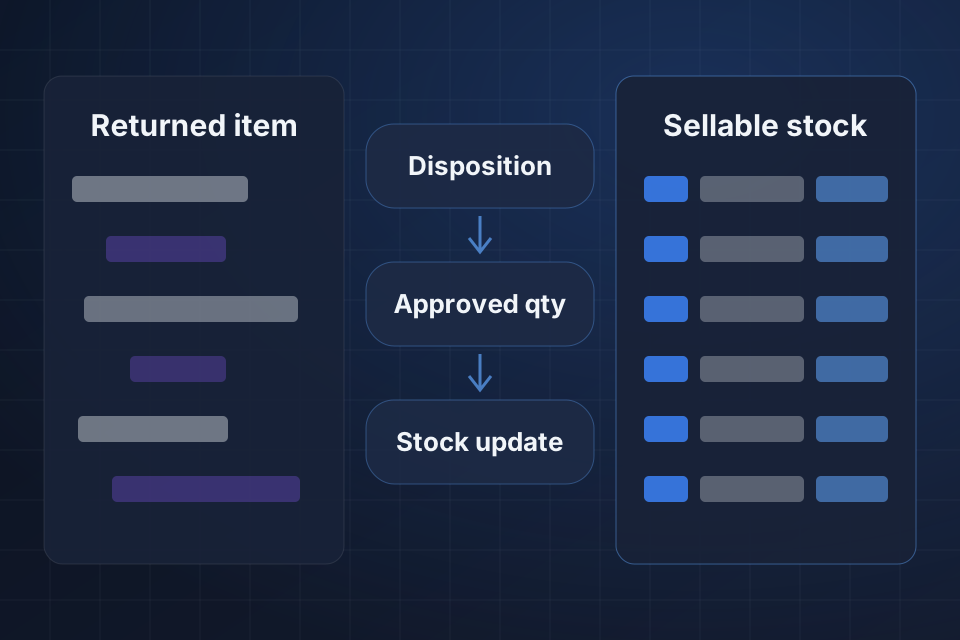
Your staff receive and approve returned units, but the sellable count doesn't go up. Your purchasing team may reorder goods that are ready to sell, because the linked stock figure is out of date.
The system shows a completed refund with no clear decision on the stock. Your staff can't tell whether goods were received, approved for resale, or kept off sale on purpose for another reason.
Stock goes up before the item has cleared inspection. The amount offered to customers includes units that still need repair, quarantine, or an approved decision to dispose of them before they can be sold.
We map the receipt, inspection, and decision records for a typical return. The warehouse decision sets which units can be sold and which statuses must not raise the stock for sale.
Next, we trace an approved movement through location and SKU mappings. A correct count can still be off sale because it reached the wrong warehouse category or another product variant.
We compare received and approved counts with the original order lines. Then we check partial returns and repeated messages apart from the refund amount, which may not describe what happened to the stock.
We connect the approved decision to the supported stock update. Returned units reach the intended location and stock category, following the warehouse's decision about their condition and whether they can be resold.
We keep partial counts and spot repeated updates against the original return lines. Only units actually received and approved get restored, regardless of whether the refund covered a different amount.
You get a list to review of approved returns with no stock movement. Your staff can check safe references and past adjustments before deciding whether each exception needs recovery or a balance check.
No. A refund can happen before receipt, or it can cover goods that can't be resold. We separate the money side from the warehouse decision and agree on which inspection status allows a restock. That prevents a payment event from silently deciding your physical stock levels.
That depends on the locations and stock categories each platform supports, which we review first. Goods may enter quarantine before moving into a sellable warehouse. Typical return tests show whether those moves work for the affected locations, so we don't assume one warehouse's behavior applies everywhere.
That depends on the evidence you have, particularly when your staff already corrected balances by hand after the first failure. We compare approved returns with recorded stock movements for an agreed period. Your staff review exceptions before any adjustments are made.
Tell us your store and the return or warehouse tools involved. Share one return, with personal details removed, showing its inspection decision, approved quantity, and missing stock movement. We can then trace where the stock should have gone.
Tell us about your project and we'll get back to you within 24 hours.