Components stay available after sale
A bundle sale reduces the parent quantity but leaves component stock unchanged. Those goods stay open to other customers, even though the warehouse has committed them to the first order.
eCommerce operations
A bundle sells while its components stay available for another order. Your warehouse finds the shortage during picking, and cancellations can make balances drift further. We match bundle contents to your main stock system and check movements through the order.
Discuss this problemWe compare the items and counts in the sold bundle with the contents that applied when the order was placed. Holding stock, using it, and shipping it may belong to different systems, so we trace who does what before changing anything. The review includes mixed orders, repeated messages, and later quantity edits. Your warehouse staff approve how cancellations and swaps should affect stock. Correcting past balances is handled separately from testing the new process on new sales.
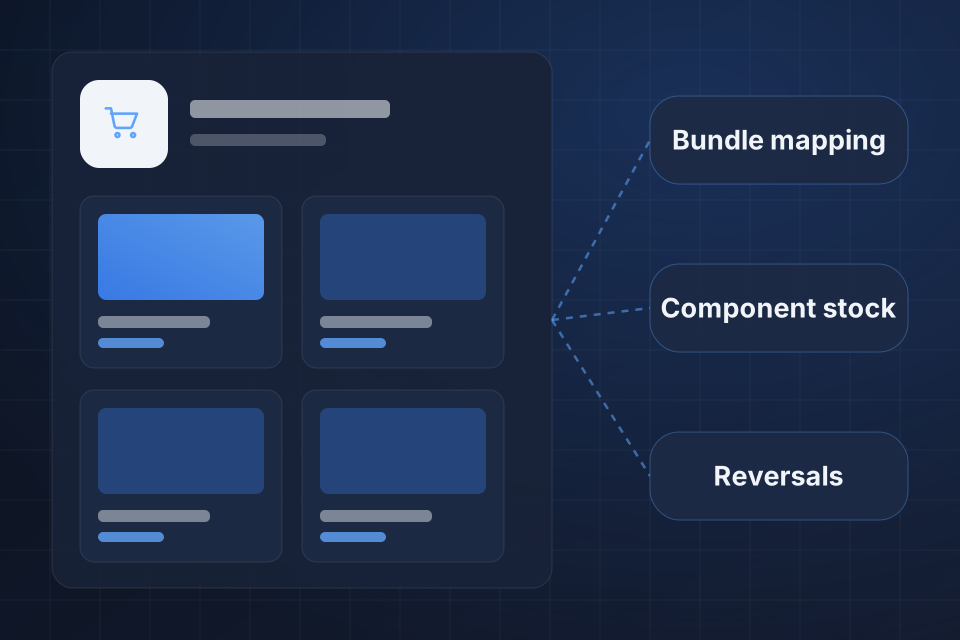
A bundle sale reduces the parent quantity but leaves component stock unchanged. Those goods stay open to other customers, even though the warehouse has committed them to the first order.
One sales channel sends the component counts while another sends only a parent SKU. Your staff must translate the records by hand before they can trust stock levels across the connected systems.
The first deduction is correct, but a cancellation or quantity edit restores the wrong items. Stock drifts after routine order changes that use a different bundle list or undo rule.
We compare component SKUs and required counts with the bundle contents that applied to the sample order. Later catalog changes and approved swaps stay separate from what was first sold.
We follow holds and stock movements from sale through fulfillment. That shows which system owns each step and whether competing connections deduct the same committed stock.
We review cancellations, edits, and partial fulfillment against earlier movements. A correct first deduction still needs a clear rule for undoing it when some items have already shipped or been swapped.
We align supported mappings so a sold bundle resolves to its approved items and counts. Your catalog and warehouse staff get a record of who owns each bundle's contents and when later changes take effect.
We assign each relevant movement to the agreed stock system and step. We test duplicate handling at that point, so repeated sale messages cannot use up the same items again.
We build the approved cancel and edit behavior on top of the earlier stock movements. Goods already shipped or swapped stay visible for warehouse decisions, and they don't get blindly returned to available stock.
That depends on your selling and inventory platforms. We assess whether the stock figure comes from the components or is kept separately, then agree on which one is the source of truth. The stock you promise must match what your warehouse staff will actually pick for the bundle.
We can compare a limited set of bundle orders with their movement history. Warehouse approval is needed before adjusting balances, especially where your staff have already made physical corrections. Correcting past balances stays separate from checking that new bundle sales use the intended stock.
Existing orders need a clear record of what the bundle held when they were placed. We document how new contents affect later sales and keep review for swaps that change fulfillment or customer expectations. A catalog change should not silently rewrite what an earlier order requires.
Name your store, inventory, and fulfillment systems. Share one bundle order, with personal details removed, along with what the bundle contains and the stock changes you saw. We can then trace the amounts your warehouse expected to use.
Tell us about your project and we'll get back to you within 24 hours.