You can’t automate a process nobody has written down. A clear map comes first.
The way work really gets done lives in people’s heads. Steps differ between teams, handoffs get lost, and nobody can say where the time goes.
We work with your team to understand current workflows, document decision points and find where automation adds value. The result is a detailed process map that shows what to improve and serves as the blueprint for building the automation.
How your current processes work from start to finish
Where the inefficiencies and bottlenecks are
Automation opportunities, spotted in a systematic way
Consistent processes across your teams
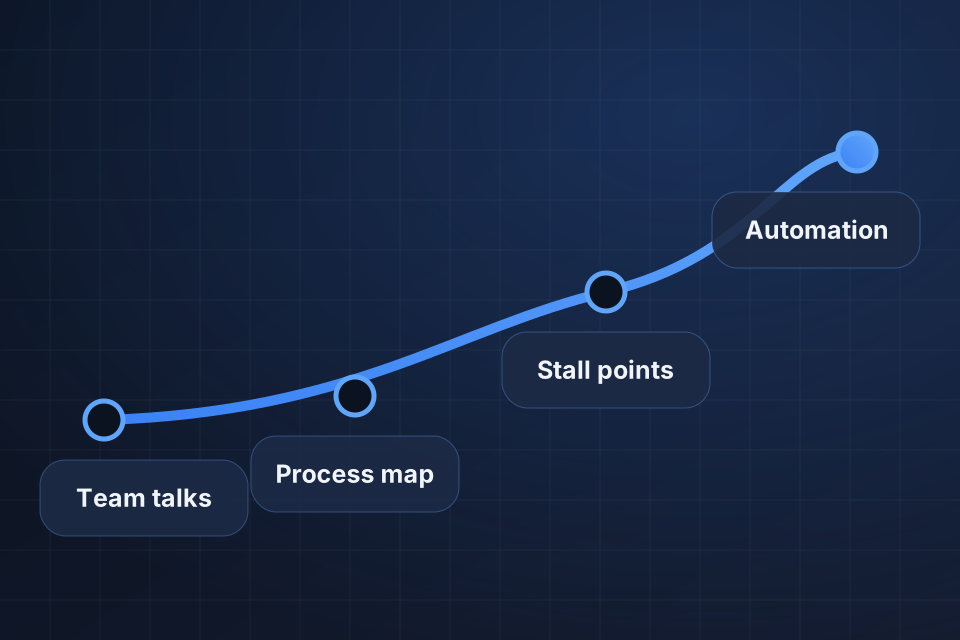
We sit down with the people doing the work, because they know the real steps and exceptions.
The normal path gets documented in detail, with notes on exceptions and edge cases.
Every decision, handoff and parallel path goes on the map, so the whole process is visible.
Repetitive steps, data re-entry, handoffs between systems and approvals get flagged as automation candidates.
We’ve automated business processes across many platforms, so we map with the build in mind. Your workflow map shows what can be automated in practice, as well as what looks good on paper.
Detailed on the normal path, with notes on exceptions and edge cases. Too much detail creates clutter, and too little misses chances to improve.
The people doing the actual work are essential. They know the real process, the exceptions and why each step exists. Without their input, you’ll miss critical details.
Look for repetitive manual steps, data re-entry, handoffs between systems and approval processes. These are classic candidates that deliver quick wins.
Yes. Workflows with decision trees, parallel paths and exceptions can all be mapped and automated. Clear process documentation keeps the complexity manageable.
Tell us about your project and we'll get back to you within 24 hours.