Customers confirm payment but orders wait
The provider records success while the storefront keeps the order pending. The customer assumes work has started, but your fulfillment team can't use that status to release it.
Payments
Customers have proof of payment, but staff still see orders awaiting payment. Fulfillment pauses while someone checks the provider by hand. We match payment records with orders, fix the confirmed status update and test delayed messages before recovering affected orders.
Discuss this problemWe compare one payment with the order it belongs to and the events received afterward. A payment status may only mean authorization (a hold on the funds), not the completed payment your business needs before it releases an order. Your team decides which status counts before we change how orders move. We check how events are validated, matched and ordered, then test the affected payment method. We check past pending orders against provider records and any manual releases before any bulk fix.
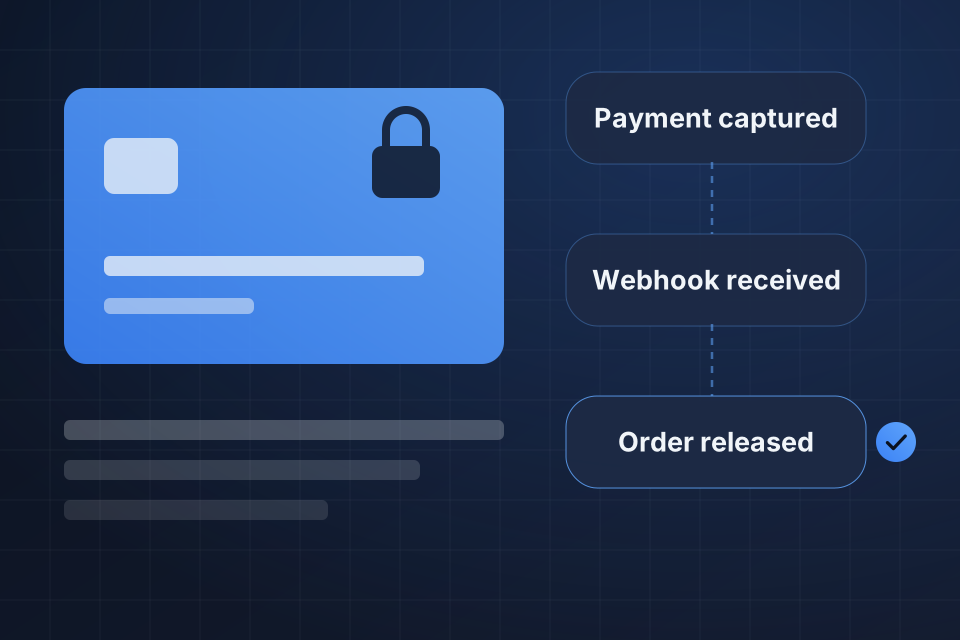
The provider records success while the storefront keeps the order pending. The customer assumes work has started, but your fulfillment team can't use that status to release it.
Staff check the provider's records outside the order system before they release an order by hand. That workaround slows routine work and makes the reason for the status change harder to audit later.
Redirected or delayed payment methods stall more often than the simplest checkout path. So a passing test with another method doesn't check the update that fails for affected customers.
We match provider payment references with order numbers and event times. That shows whether the payment record belongs to the pending order before we consider any status change.
We inspect the code that receives payment messages: how it checks them and which types it accepts. Rejected messages, mismatched references or processing errors can explain why a verified payment never reaches the order.
We agree which provider status allows fulfillment for this process. We separate authorization from completed payment. That includes later reversals or out-of-order messages that could change the order the wrong way.
We repair the supported status change after we validate the event and match it to the right order. The new status reflects the payment stage your business approved, not the mere arrival of any provider message.
We handle delayed or out-of-order events according to the confirmed payment stages. An earlier pending update can't blindly reverse a later accepted success, and unclear changes stay open for review.
We compare the affected pending orders with provider records and earlier manual actions. We recover only approved missing status changes, keeping payment references and avoiding a second fulfillment release.
Not necessarily. Provider statuses have different meanings and may include authorization before capture or settlement. Your finance and fulfillment owners approve which status releases an order. We set up that decision and keep the supporting reference, rather than treating every customer confirmation as proof of settled funds.
Only after a defined comparison with payment records. Orders with reversals, unclear references or an existing manual release need review first. We then recover the approved missing status changes, without redoing work staff already finished outside the failed update.
A provider-supported test is useful where available. We agree the relevant payment method and expected outcome with your team before testing. We work from event records and redacted references, and you don't need to share payment card details.
Tell us your storefront and payment provider. Share one redacted order reference and provider status showing the mismatch, with the rough payment time, so we can trace the expected status change.
Tell us about your project and we'll get back to you within 24 hours.