Digital Presence Setup: Domain & Hosting Setup

Your domain is a business asset. It should be registered properly and stay under your control.

Who Controls Your Domain?

Your domain may be registered under a former web designer’s account, and nobody remembers the login. Your site may also sit on hosting that nobody has reviewed in years.

We handle registrar selection, DNS configuration, SSL certificates and hosting platform setup. You end up with a domain you clearly own and reliable hosting that suits your business and can grow with it.
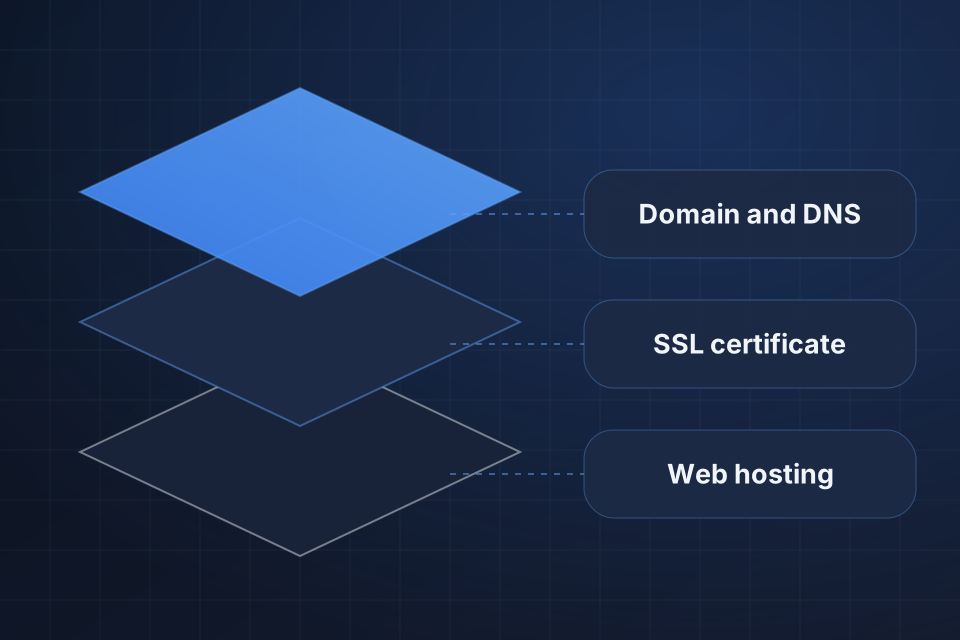
Diagram of a website's foundation in three layers: domain and DNS, SSL certificate and web hosting.

What Gets Sorted Out

Clear domain ownership, with no confusion about who holds it

Reliable hosting you don’t have to worry about

Fast page loads on the right infrastructure

Secure connections that protect your visitors’ data

From Registrar to Live Site

1

Pick the registrar

We choose where your domain will be registered, usually separate from your host for flexibility.

2

Match the hosting

Your site type and expected traffic decide between shared hosting, managed WordPress hosting or a cloud platform.

3

Point the DNS

DNS records connect your domain to your hosting, route your email and set up any integrations you need.

4

Secure the connection

An SSL certificate goes on, so data between visitors and your server stays encrypted.

Why Choose System Strats

We’ve built digital presence strategies for companies at all stages. Whatever stage you’re at, your domain and hosting get set up to support the site and email that will run on them.

Frequently Asked Questions

Not necessarily. We recommend a registrar such as GoDaddy or Namecheap for your domain and a separate provider for hosting, based on your needs. That gives you flexibility if you ever change hosts.

It depends on your website type and expected traffic. We recommend shared hosting for small sites, managed WordPress hosting for content sites and cloud platforms for complex applications.

SSL certificates encrypt data between your visitor’s browser and your server, protecting sensitive information. Modern browsers flag unencrypted sites as insecure, so SSL is essential.

DNS tells the internet where your domain points. We configure its records to point your domain to your hosting, set up email routing and connect any required integrations.

Ready to Get Started?

Tell us about your project and we'll get back to you within 24 hours.