Totals disagree with line items
Extracted quantities and amounts don't add up to the invoice total. The output looks clean, so the math error is harder to spot than when a reviewer compares it with the original document.
AI integration
An extracted invoice looks neat, but its lines don't explain the total. A misread discount or tax amount can reach accounting unnoticed. We compare values with the document, apply agreed checks, and keep unresolved differences out of automated posting.
Discuss this problemWe work from invoices with private details removed, keeping the layout and the math we need to diagnose the problem. We check line quantity, unit amount, and adjustments, along with the currency and rounding assumptions your finance team approved. Difficult scans or multi-page lines may need a different review path from clear, recurring layouts. The new process keeps the source evidence for disputed fields and stops unresolved mismatches from posting. Your reviewers approve corrections, and our sample testing checks more than whether the output is valid structured data.
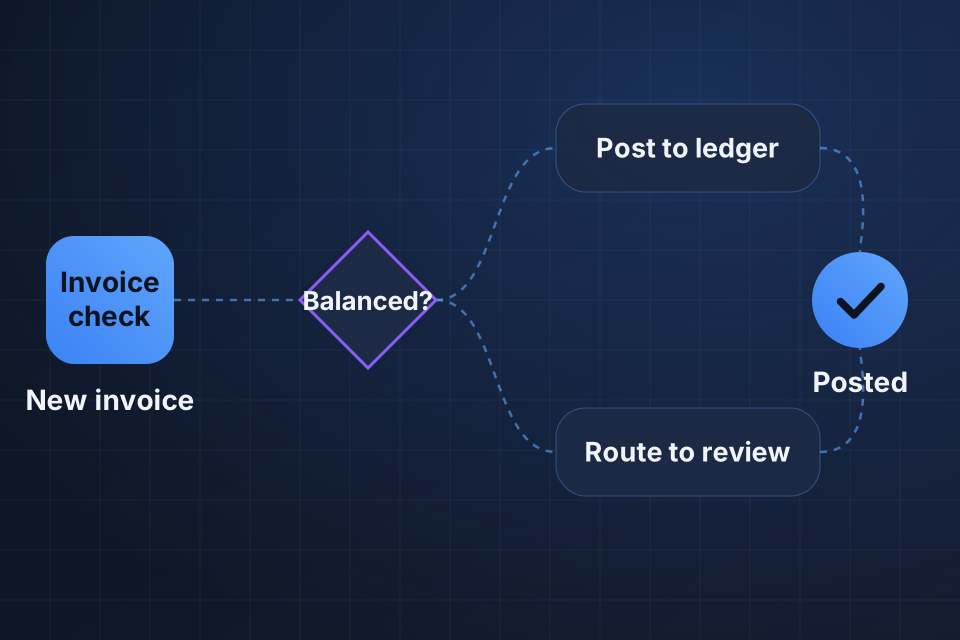
Extracted quantities and amounts don't add up to the invoice total. The output looks clean, so the math error is harder to spot than when a reviewer compares it with the original document.
Tax or discount text gets read as a product line or as another type of adjustment. Your staff can't explain the amount due from the fields going to your accounting system.
The result gives little evidence for an unclear number. Your reviewers must reopen the invoice and find the disputed figures by hand before they can safely approve or correct the values.
We compare extracted fields with the parts of the document behind them. This checks whether a believable number came from the correct line, and not from a subtotal, a page carryover, or an unrelated invoice reference.
With your finance team, we review quantity multiplication, adjustments, currency, and rounding. The expected math must be defined before anyone can call a difference an extraction defect or an acceptable way of showing the value.
Next, we identify the layouts and scan conditions linked to mismatches. Multi-page lines and changed supplier formats need typical tests, so that validation doesn't rest only on the easiest recurring invoice.
We apply approved math and field checks before anything posts to accounting. An unresolved difference becomes an exception with the conflicting values marked, and it does not look like a finished invoice ready for accounting.
For fields that need review, we keep safe source references or relevant excerpts. Your staff can inspect the evidence behind a disputed value without repeating the whole extraction investigation.
Unclear or high-stakes mismatches go to an accountable reviewer. We record their correction and approval before release, and repeated error types join the ongoing test sample.
That depends on document quality and how much a wrong value matters. We keep approval for unclear or financially significant exceptions. We judge automation on typical invoices and total review effort, not on how many documents produce structured output.
Copies with private details removed are useful when they keep the layout and the math behind the mismatch. Take out account and personal details, but keep the relevant quantities, tax, and totals. A small sample can reveal the reading problem without sharing your whole supplier document collection.
No. Math checks can detect inconsistency but can't prove that every field was read from the right place. We also examine document identity, currency, and source evidence for important values. A perfectly balanced set of wrongly extracted fields would still need a different safeguard.
Name your extraction and accounting tools, then share one invoice example with the mismatched output. Keep the line amounts, tax, and total structure, and remove sensitive account or personal details.
Tell us about your project and we'll get back to you within 24 hours.