Review takes as long as manual work
Your staff rewrite or check almost every generated output before using it. Generating is faster than preparing by hand, but the whole task still takes similar effort once you count the checking and correction.
AI integration
The AI finishes quickly, but your staff spend just as long checking and correcting its output. The task hasn't gotten easier. We examine the whole workflow, narrow the useful scope, and test quality checks against your team's actual effort.
Discuss this problemWe watch preparation, generation, and review on typical tasks, including the corrections needed before an output is usable. Accepted examples set the standard for each task, and repeated error types show where the effort goes. Missing evidence or an unsuitable task may matter more than the wording of a prompt. Our proposed changes keep review for consequential decisions. A later comparison of the whole task shows whether the new approach saves work, or only moves it into a checking step.
Your staff rewrite or check almost every generated output before using it. Generating is faster than preparing by hand, but the whole task still takes similar effort once you count the checking and correction.
The same missing field or unsupported claim keeps showing up. Your reviewers fix predictable defects each time, because no targeted check stops those known errors from reaching their queue.
Your team can't tell ready outputs from ones that need detailed review. Low-risk and high-stakes cases get similar checking, because the acceptance criteria and supporting evidence aren't clear enough.
We observe the full task and compare its preparation, generation, and review effort with manual work. Timing only the response would hide the correction burden that prompted the investigation.
We compare outputs with approved examples and sort out the expensive repeat errors. How much each error matters to the business, and how often it appears, shows which checks are worth testing before staff review begins.
We assess task fit, instructions, and available sources together. If the input lacks the evidence it needs, or nobody can practically check the output, a prompt change alone may not make the AI useful.
We narrow the AI's job to work with clear acceptance criteria and suitable evidence. Unsuitable decisions stay with your staff and aren't included simply because the model can produce a response.
We add targeted checks for repeat failure types and keep the supporting information. Known defects can become explicit exceptions before reviewers spend time rediscovering the same problem in another output.
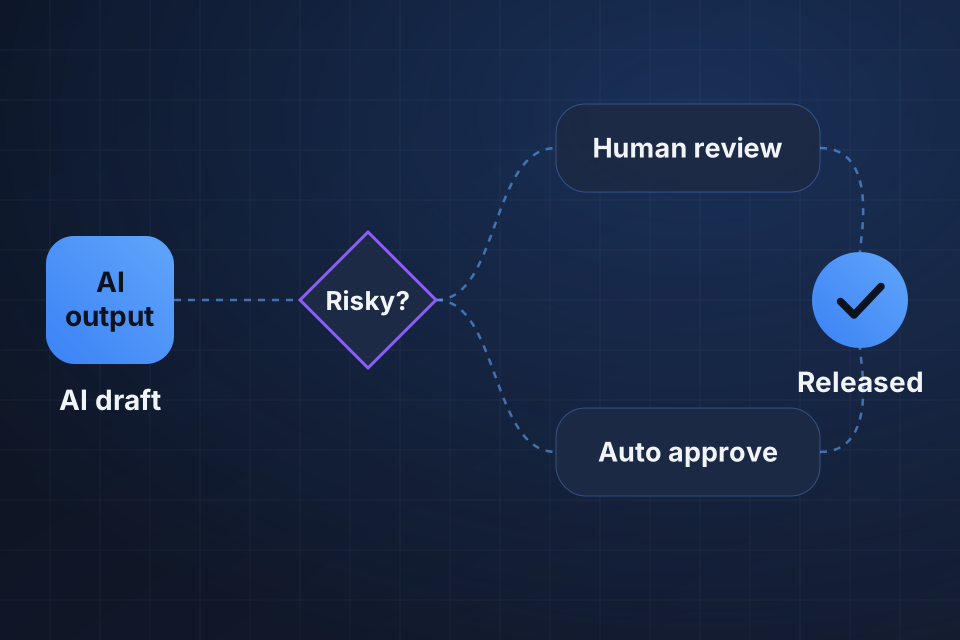
We design review around uncertainty and consequences, then measure the whole revised task. The comparison includes corrections and approval, so any claimed improvement reflects usable work and not raw generation speed.
They can help, but missing evidence or an unsuitable task may still create heavy review. We evaluate the whole workflow and repeat errors before choosing the change. Prompt wording is one possible control. It is not evidence that the whole task will save effort.
The evaluation should make that result visible. We narrow or stop assistance that doesn't improve the whole task. A fast output isn't productive if the reviewer still does the original work to establish that it's correct.
Yes, where uncertainty or consequences justify it. We define the criteria and evidence your reviewers need, then test whether that combined process reduces effort. The aim is a useful limit on what the AI handles, and not hiding important errors by removing the checking step.
Tell us which AI tool you use and the task it supports. Share one output, with personal details removed, alongside the correction your staff had to make. We can then inspect the error and the time-consuming review decision.
Tell us about your project and we'll get back to you within 24 hours.