Twilio: Integrations & API Work

Twilio only earns its keep once it’s connected to the systems your team works in.

Connecting Twilio To Your Systems

Customers text you, but the messages never show up in your CRM. Or a call comes in, and your ticketing system has no record of it. Twilio is an API product, so it does little until it’s wired into the rest of your business.

We build custom integrations, webhook handlers and middleware that connect Twilio to your CRM, ERP, ticketing system and custom applications. A webhook is an instant notice Twilio sends your system when a message or call arrives. Middleware is the layer in between that holds your routing and business rules.
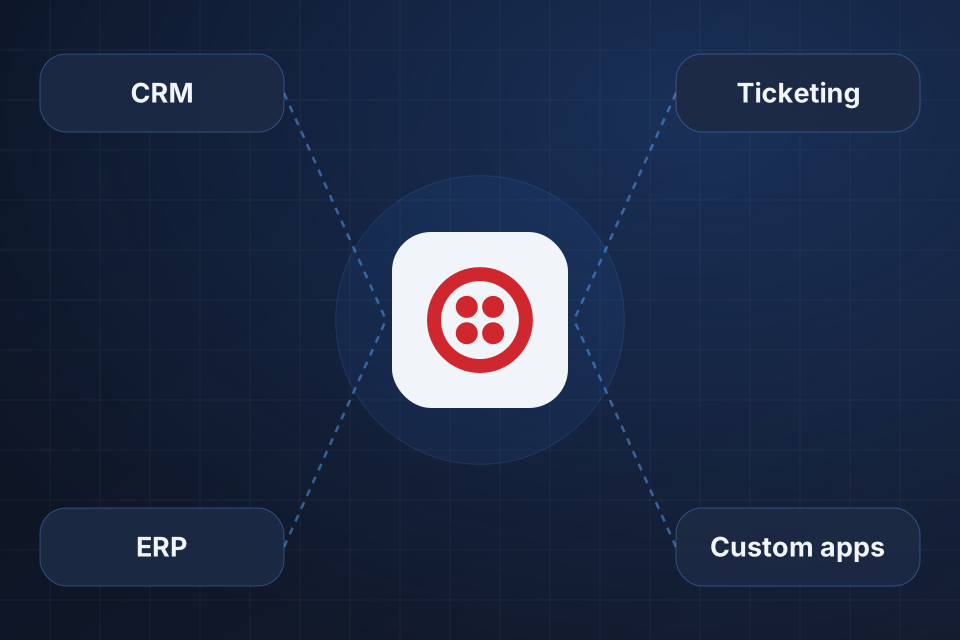
Diagram of Twilio at the center, connected by custom code to a CRM, an ERP, a ticketing system and other apps.

What The Code Handles

Custom API integrations for sending and receiving messages

Webhook handlers for inbound messages and call events

Middleware for complex routing and business logic

Connections to Salesforce, HubSpot, Zendesk and custom apps

How We Connect Twilio

1

Review What Exists

We audit any current integration, document how it works and decide whether it needs fixing or a rewrite.

2

Choose The Build

Simple flows can stay in Twilio Functions or Studio. Production work often moves to dedicated services for easier testing.

3

Write The Code

The integration gets built in Node.js or Python, matching your existing stack and preferences.

4

Take Over Maintenance

Once it’s live, we handle the ongoing maintenance, so your team doesn’t have to.

Why Choose System Strats

We care about compliance, cost, monitoring and maintainability from day one, which saves our clients from the expensive mistakes that most Twilio accounts eventually run into. For integration work, that means documented code with monitoring in place.

Frequently Asked Questions

For most real applications, yes. Twilio is an API-first platform, and getting the most out of it usually takes custom code. We handle the development, so your team doesn’t need to.

Most of our Twilio work is in Node.js or Python, depending on the existing stack. For clients with strong language preferences, we match their environment.

Yes. We audit existing integrations, document how they work, fix issues and take over ongoing maintenance. Sometimes a rewrite makes sense, but usually we work with what exists.

They’re great for simpler workflows and prototypes. For production workloads, we often move logic to dedicated services, which makes testing, monitoring and maintenance easier.

Ready to Get Started?

Tell us about your project and we'll get back to you within 24 hours.