Make: Troubleshooting & Optimization

When a scenario fails or the bill jumps, you need the cause found, and you need it fixed properly.

When Scenarios Stop Working

A Make scenario that worked last month now fails, sends bad data or behaves in ways nobody can explain. Maybe the person who built it has moved on, or your operations bill has jumped.

We troubleshoot and improve existing Make setups. We trace each problem to its cause, fix it, and make your scenarios more reliable and efficient. Monitoring and error handling go in as well, so the next issue doesn’t stay hidden.
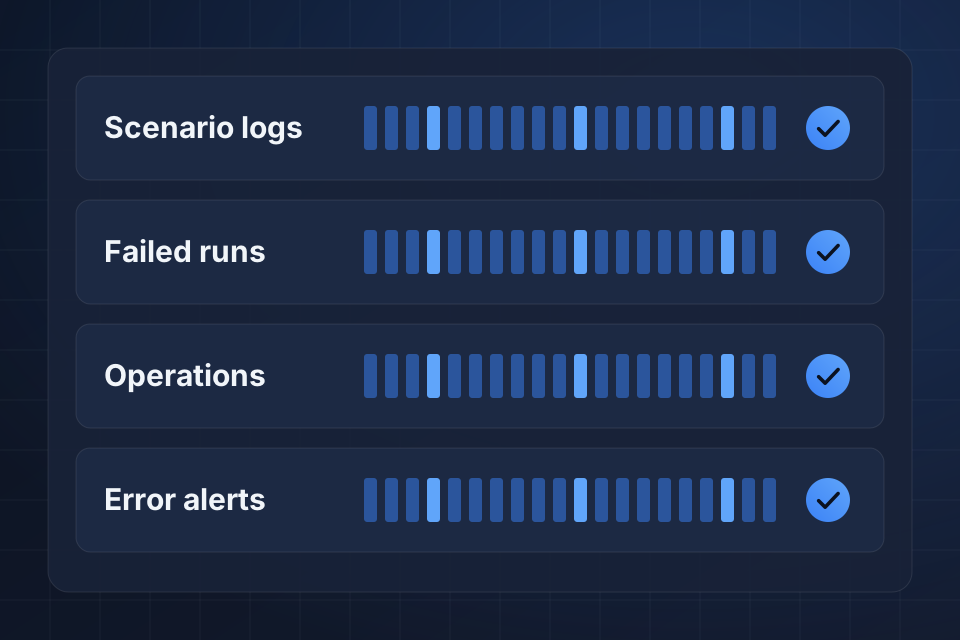
Diagram of a Make status board reviewing scenario logs, failed runs, operation use and error alerts.

What Gets Fixed

Root cause analysis for scenario failures

Data flow checks that show where values go wrong

Lower operations use, which reduces your costs

Scenarios rebuilt for clarity and easier upkeep

How We Fix Scenarios

1

Read The Logs

We examine execution logs, module settings and data flows to find what actually went wrong.

2

Fix The Cause

Usual culprits are API changes, data format mismatches, timeout settings and missing error handlers.

3

Cut Operations

We remove needless operations, combine redundant scenarios and add batching to bring usage down.

4

Add Monitoring

Proper monitoring, error handling and documentation go in, so future problems surface quickly.

Why Choose System Strats

We’ve architected complex Make scenarios for technical and non-technical teams. That experience helps us work through someone else’s build and leave it easier to maintain.

Frequently Asked Questions

Yes. We diagnose failures by examining execution logs, module settings and data flows. Common causes include API changes, data format mismatches, timeout settings and missing error handlers.

Start with an audit of scenario efficiency. We remove unnecessary operations, combine redundant scenarios and add batching. We also find scenarios where schedule changes can reduce operation use.

Yes. We regularly inherit Make environments from other agencies, freelancers or internal teams. We document existing scenarios, fix issues, and set up proper monitoring and error handling.

We rework how data moves so the scenario makes fewer API calls. We also add caching, use aggregators for batch work and run separate branches side by side. That cuts both run time and operation count.

Ready to Get Started?

Tell us about your project and we'll get back to you within 24 hours.