Google Merchant Center: Supplemental Feeds & Promotions

Change what Google sees without changing your store or your main feed.

Fixes That Skip Your Platform

You need one attribute corrected or a sale price added, but changing the source system is slow or risky. Your main feed integration works, and you’d rather not disturb it.

Supplemental feeds add to or override your primary feed without editing the source system. We use them to add custom labels, fix individual attribute issues and run promotions. They solve data problems the primary feed can’t, and your main integration stays as it is.
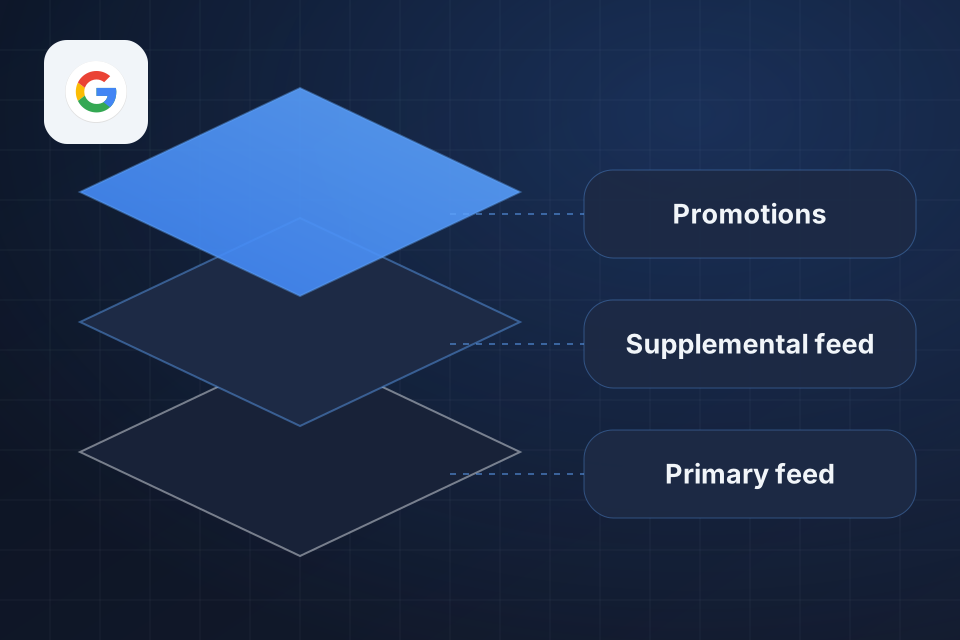
Diagram of Google Merchant Center feed layers, with promotions and a supplemental feed on top of the primary feed.

What Supplemental Feeds Handle

Custom labels for campaign segmentation

Attribute fixes without changing the primary feed

Promotion and sale price management

A multi-source feed setup for complex catalogs

Layering Data Over Your Feed

1

Spot the gap

We find what the primary feed can’t solve, such as attribute issues, missing custom labels or promotions.

2

Choose a source

We start with a Google Sheet for manual corrections or label tests, and move larger data to a proper feed source.

3

Match by ID

We match each row to your primary feed by item ID, so changes apply only to the items listed.

4

Run promotions

We manage sale prices and promotions through the supplemental feed and leave your ecommerce platform untouched.

Why Choose System Strats

We work on Merchant Center alongside Google Ads every day, and we know exactly where the issues live on every major ecommerce platform. A supplemental feed can hide a deeper problem, so we tell you when the fix belongs in your source data and handle that cleanup too.

Frequently Asked Questions

It’s an extra data source that layers added or corrected data on top of your primary feed, matched by item ID. It’s Google’s official way to enrich a feed without rebuilding the source integration.

Whenever you need to fix attributes, add custom labels, manage promotions or override primary feed values without editing the source platform. They’re very common for larger catalogs.

Yes, and it’s often the fastest way to manage manual corrections or test custom labels. For larger or more dynamic data, we usually move to a proper feed source.

No. Supplemental feeds are processed alongside the primary feed, and they apply only to the items they reference.

Ready to Get Started?

Tell us about your project and we'll get back to you within 24 hours.