Work happens outside the intended process
Staff finish work through personal lists or messages, not the shared process. The task still gets done, but the business loses sight of it, and other teams can't be sure where it stands.
Training & managed support
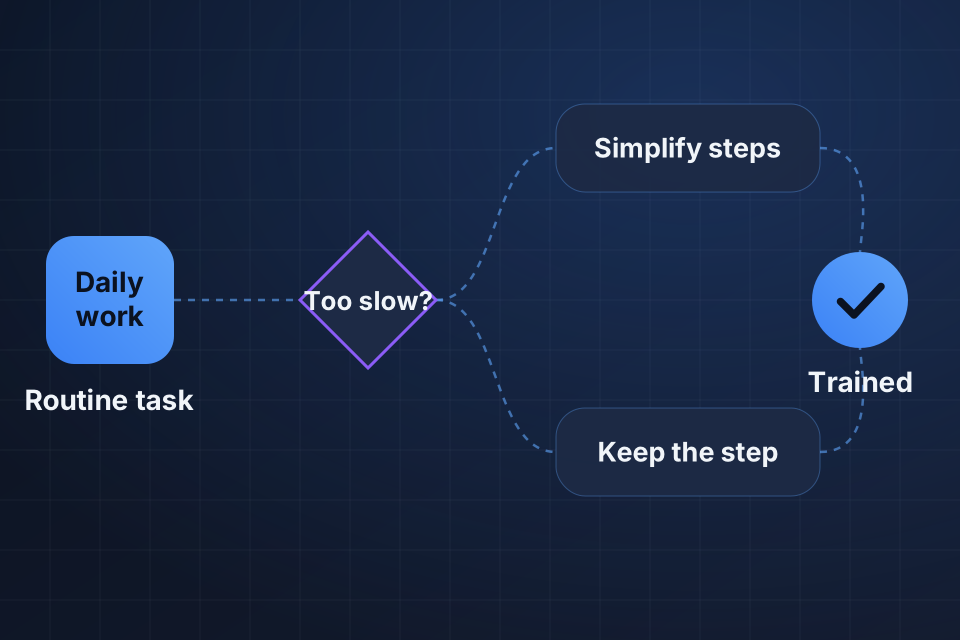
Staff use side lists and messages because routine system work takes too many steps. Shared records fall behind even though the work gets done. We observe the friction, simplify supported workflows and test whether the new path fits real work.
Discuss this problemWe watch sample tasks with your staff before assuming the issue is training. Repeated entry, unclear ownership and instructions that no longer match the process can all encourage workarounds. We compare the useful information in those side routes with what other teams need in the records. Your owners then approve a revised path your system supports, with a practical way to handle common exceptions. Training uses realistic examples after the change. We review later feedback or usage separately from whether the new setup was deployed successfully.
Staff finish work through personal lists or messages, not the shared process. The task still gets done, but the business loses sight of it, and other teams can't be sure where it stands.
The same information has to be entered again and again across screens before a simple task finishes. Staff choose a shorter path, but it leaves the records other teams need incomplete or out of date.
Written instructions don't fit common situations, so staff improvise. Repeated exceptions teach the team to bypass the process and stop trusting the supported path and its escalation decisions.
We watch tasks with the people who do them and note what prompts each workaround. Real waits and repeated entry are better evidence than assuming low use means people don't want to learn.
We compare the side routes with the records other teams need. The review finds useful information captured informally, and the shared evidence lost when staff finish work outside the intended system.
Setup, ownership and training get assessed against the actual task. Screen changes may help, but a decision nobody owns or an outdated instruction can still make the official path impractical.
We reduce the verified recurring friction through supported configuration or a scoped workflow change. The revised task keeps required controls and removes the unneeded entry or navigation we saw during observation.
Required information and decisions move to where staff can provide them during real work. We check the records other teams use, so convenience does not merely move missing data to another team's queue.
We train with realistic examples and give staff a way to report exceptions we didn't cover. Later use and staff comments show whether the workaround still serves a need once the revised process is available.
It may not be. Training can help, but staff may be responding to real process friction. We watch their work before deciding whether instructions, ownership or configuration need to change. Teaching more steps will not necessarily solve a task whose supported path stays impractical under normal conditions.
No, because some exceptions need a deliberate alternative path. We separate useful flexibility from undocumented work that loses shared evidence, then agree on ownership and record needs. Removing a workaround without understanding its purpose can leave staff unable to finish the real business task.
We test sample work with your staff and inspect the resulting records. Later adoption and feedback get evaluated separately from deployment or training attendance. A changed screen is not enough evidence of improvement if staff still need the same outside list to finish the task.
Tell us the platform and the routine task staff avoid. Share one example of the workaround, with private details removed, and the result you expect from the system. We can then inspect the unnecessary steps and the information other teams are missing.
Explore Training & Enablement More problems in Training & managed support
Tell us about your project and we'll get back to you within 24 hours.