Technology Stack Selection: Requirements Documentation

The cheapest time to settle what a system must do is before anyone buys or builds it.

Agree Before You Buy

Sales wants one thing, finance wants another, and the vendor is waiting for an answer. Without written requirements, projects drift and each new request adds cost and risk.

We capture your business needs, data flows, integration needs and success measures before you pick a platform or start a build. The result is a clear technical spec that prevents scope creep, meaning a project growing past its plan, and lowers your risk.
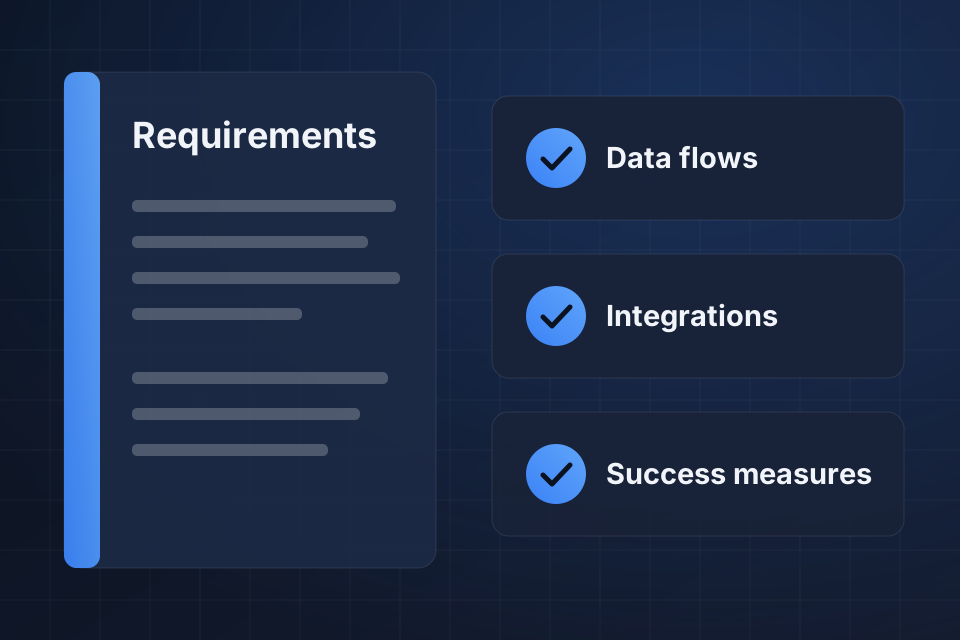
Illustration of a written requirements document with a checklist covering data flows, integrations and success measures.

What You Get in Writing

Clarity on exactly what you need from technology

A benchmark for judging how well each platform fits

Fewer surprises and delays during the project

Clear success criteria for the work

How We Capture Requirements

1

Interview Stakeholders

We talk with operations, finance, sales and IT so every team’s needs get captured.

2

Document the Details

We write down business needs, data flows, integrations and success measures at a practical level of detail.

3

Settle Conflicts

We work through clashing needs by business impact and feasibility, and mark what’s critical and what’s nice to have.

4

Set the Baseline

We finish with one document you can judge platforms against and use to manage change requests.

Why Choose System Strats

We’ve guided companies through tech stack decisions, and we understand business models, platform capabilities and long-term implications. That helps us ask the questions a requirements document needs to answer.

Frequently Asked Questions

People from across the business: operations, finance, sales and IT. We’ll interview stakeholders in each area, because every team has different needs that must be captured for a complete picture.

Detailed enough to evaluate platforms and guide the build. We balance detail with practicality, because requirements that go too deep soon become outdated.

We lead discussions about business impact and feasibility. Some requirements are critical and others are nice to have. Sorting them out guides both platform selection and budget decisions.

Yes, and that’s normal. Good requirements documentation gives you a baseline, so you can manage change requests formally and avoid scope creep.

Ready to Get Started?

Tell us about your project and we'll get back to you within 24 hours.