The familiar failure returns
A familiar failure comes back after an earlier ticket was closed. Each time sets off another urgent recovery, while the repeated workload or system state behind it stays unexplained to your team.
Training & managed support
Your team restores service, but the same interruption returns after a familiar event or workload. Tickets close with no evidence the cause changed. We connect repeat failures, test the suspected trigger and separate a verified fix from the quick recovery.
Discuss this problemWe compare incident dates, symptoms and recovery steps with the system evidence. Similar symptoms do not automatically share a cause, so we look at shared systems or workload patterns before we propose a fix. A safe test then repeats the suspected trigger. Your owners approve the scope of the fix, and you keep the recovery steps for day-to-day use. After the change, we review the earlier fault and any later incidents against it. A successful restart is not proof that the problem won't come back.
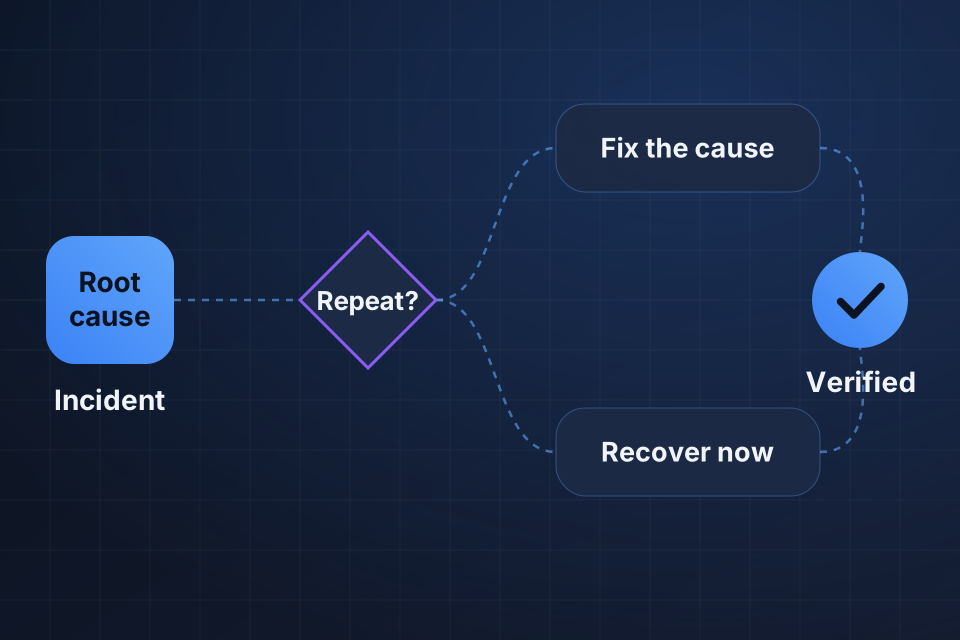
A familiar failure comes back after an earlier ticket was closed. Each time sets off another urgent recovery, while the repeated workload or system state behind it stays unexplained to your team.
Staff clear a queue or restart a component and service resumes. The same failure returns later, because restoring service did not change what keeps causing it.
Separate tickets hold pieces of the same pattern, with no shared owner for the fix. Follow-up actions are not tested against the suspected trigger, so finishing them does not show that the repeat fault changed.
We compare repeat incidents for timing, shared systems and workload evidence. The review separates a shared pattern from unrelated failures that happen to show a similar error.
Where practical, we safely repeat a suspected trigger and inspect the result. The action that restores service gets treated separately, because recovery alone does not explain why the incident began.
We review unfinished fixes and who owns them. Each proposed change needs evidence of how it deals with the verified cause, plus a check that can actually show that effect.
We repair the verified fault in code, settings or process within the approved scope. The fix follows tested evidence of the cause. It does not repeat a familiar recovery step and relabel it as prevention.
You keep working recovery steps, and we document the separate fix. Staff can restore service if needed without mistaking that quick response for proof that the fault we looked into has gone.
We test the earlier trigger and provide monitoring evidence for later comparison. The owner of the fix reviews similar incidents against the original cause, so an apparent repeat gets a fresh, evidence-based review.
No. A restart can restore service without changing the cause. We compare evidence and test a suspected trigger before calling a recovery action a fix. This matters because a closed incident can still leave the same failure ready to happen again.
No. A verified fix deals with the cause we found, but other problems can produce similar symptoms. We keep useful monitoring and review later incidents against the original evidence. That tells you more than promising the system will never see another interruption.
Dates, symptoms and recovery actions, with private details removed, help reveal a pattern. Relevant logs can follow through scoped access once we find the affected conditions. Remove secret values and unrelated customer data from your first examples, but keep the references we need to compare the incidents.
Name the affected platforms and share one incident example, with private details removed, including its date and recovery action. A second similar incident helps us compare patterns and identify the evidence needed to test an underlying cause.
Explore Managed Services More problems in Training & managed support
Tell us about your project and we'll get back to you within 24 hours.