Reminders arrive after purchase
A buyer gets an abandoned-cart message for a cart they already completed. It asks them to finish something the order record and payment evidence show they have already done.
Email/SMS marketing & Canva
A customer buys, then gets a reminder about the same cart. The purchase update may be late or on another profile. We trace that link and repair supported send rules, so completed orders leave the reminder path we verified.
Discuss this problemWe compare a redacted completed order with the cart and contact records your marketing flow uses. Timing matters here. A correct purchase update can arrive after the customer has entered the flow, or after a message is already queued to send. We review the supported checks just before sending, as well as the entry rule. Your team agrees how a later new cart should qualify. After the fix, we test both a completed purchase and a truly abandoned cart, so the useful reminders you are allowed to send stay available.
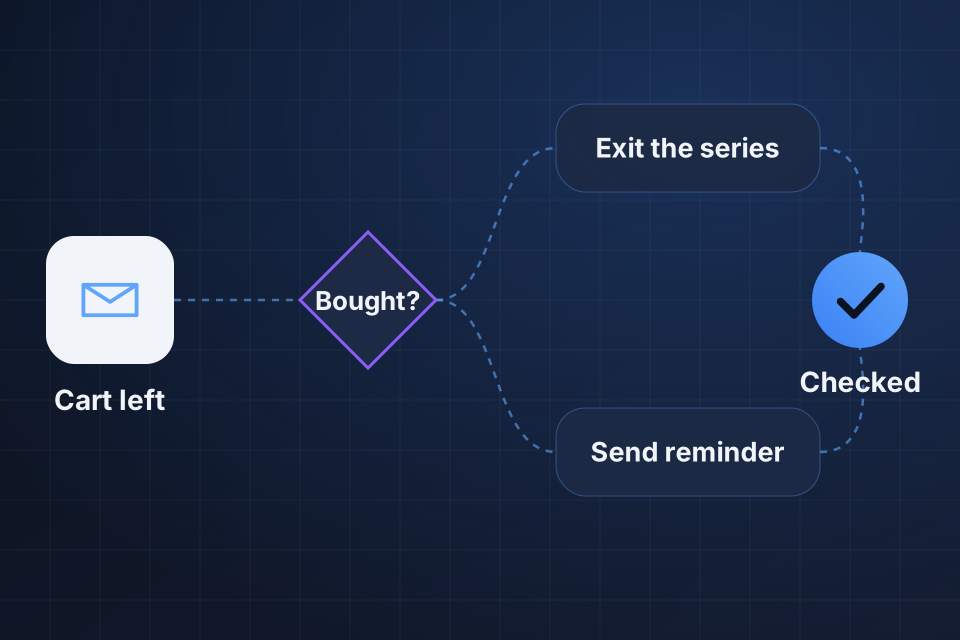
A buyer gets an abandoned-cart message for a cart they already completed. It asks them to finish something the order record and payment evidence show they have already done.
Your marketing system has the purchase but can't connect it to the profile with the waiting cart. The information sits on another record, so the reminder's eligibility check doesn't see the sale.
A reminder stays queued after the purchase update arrives. An earlier decision still controls sending, because the flow doesn't run the supported final check to exclude or cancel it.
We trace contact and cart identity from checkout into the marketing profile. That shows whether the completed order updates the same record the scheduled reminder really checks.
We compare when the purchase arrived with when the flow enrolled the customer and decided to send. Delivery delays can make an otherwise correct rule use an earlier status, so late updates need explicit handling.
We inspect the supported exit and pending-message controls in the affected flow. A check only at entry may not be enough when the customer checks out during the wait.
We repair confirmed ID mappings between completed orders and marketing contacts. The purchase then reaches the right cart record, and doesn't sit on a separate profile the reminder never checks.
We apply the approved purchase exclusion or cancellation at the supported decision point. We test how queued messages behave, and a truly abandoned cart stays eligible under its agreed consent and timing rules.
We make purchase-update delays visible and document how they can be handled. A later new cart follows a separate agreed rule, so fixing one post-purchase reminder doesn't block every future abandoned-cart message.
Generally not. Fixing the flow doesn't undo a delivered message. The fix applies to pending or future messages, according to the platform's controls. How customer service handles earlier confusing messages remains a separate decision, backed by the order and message records.
Not necessarily. We check email and SMS separately because their consent, timing and supported flow behavior may differ. The purchase exclusion can be shared, but each tested channel needs evidence that its pending messages really follow the available control.
Your team decides whether a new cart created after a purchase should qualify. The rule should connect that cart with its own completion evidence. Treating a past purchase as a permanent block could remove useful reminders for a truly separate later purchase.
Name your commerce and messaging platforms. Share one redacted order and post-purchase reminder with their times, so we can compare the cart identity, when the purchase arrived and the decision to send.
Explore Email & SMS Marketing More problems in Email/SMS marketing & Canva
Tell us about your project and we'll get back to you within 24 hours.